
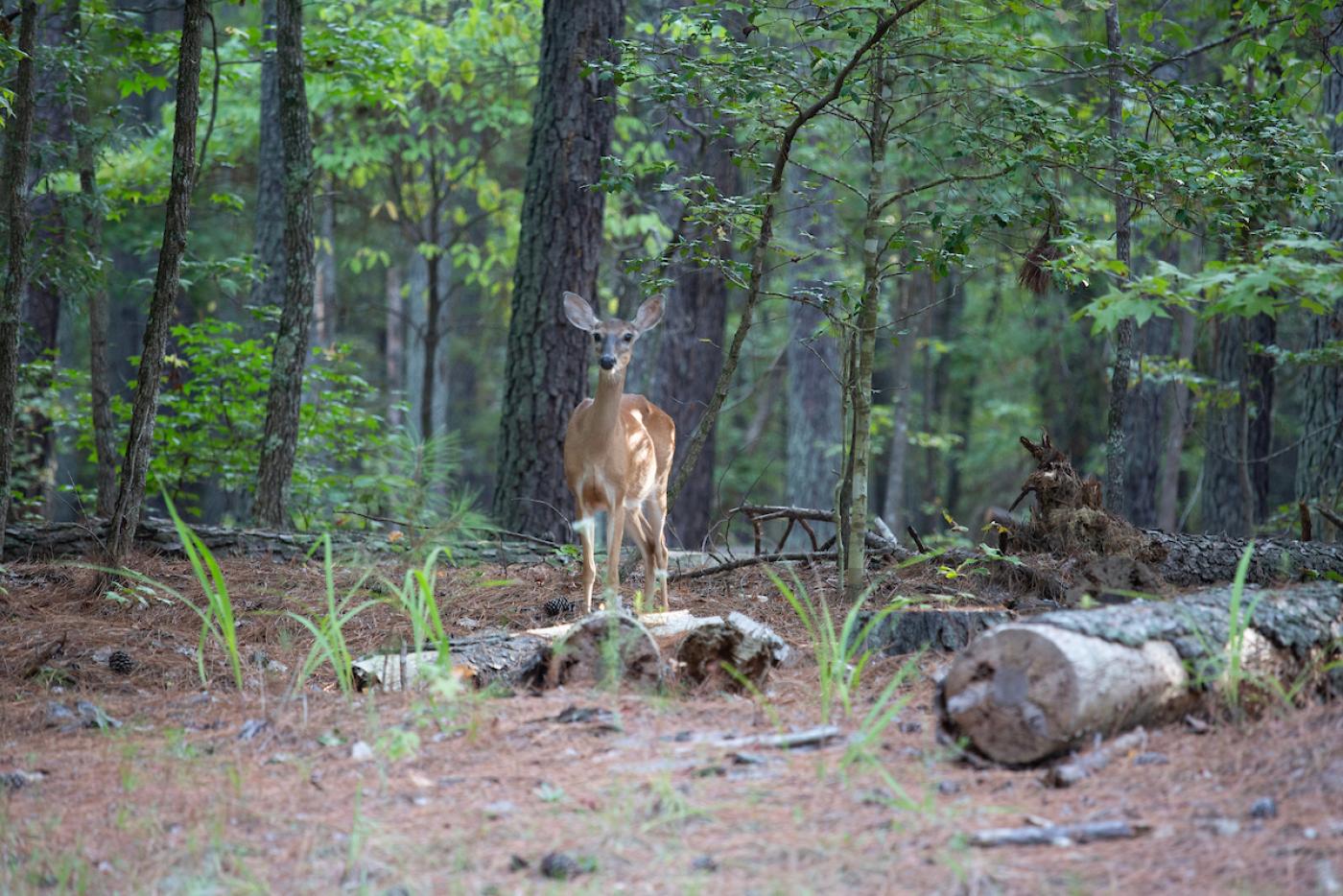
In efforts to control the spread of Chronic Wasting Disease (CWD), the N.C. Wildlife Resources Commission (NCWRC) is announcing new deer hunting regulations that will offer hunters increased deer harvest opportunities in counties where CWD has been confirmed.
New regulations for the 2026-2027 deer hunting season include:
- The introduction of a Special Early Season for antlered deer Aug. 22-23, 2026, in all CWD Management Areas using any lawful weapon. These areas include Cumberland, Forsyth, Sampson, Stokes, Surry, Wilkes and Yadkin counties. Baiting is still prohibited in these areas before September 1.
- A one-week-earlier start to the blackpowder season (Oct. 31) and gun season (Nov. 14) in the Northwestern CWD Management Area (Forsyth, Stokes, Surry, Wilkes and Yadkin counties).
- The restrictions on transporting deer carcasses from CWD Surveillance and Management Areas have been removed and replaced with statewide requirements for disposing of deer carcasses. The final disposal (either directly by a hunter or indirectly when hunters use a processor, taxidermist or trash service) of non-edible portions of deer carcasses and carcass parts originating from anywhere inside North Carolina shall be in one of the following methods:
- In a lined landfill;
- Buried 3 feet below ground and 300 feet from a waterbody; or
- Lawfully left on the ground within the county of origin.
The new hunting rules will be printed in the North Carolina Inland Fishing, Hunting and Trapping Regulations Digest and available to view online beginning Aug. 1. NCWRC stresses the importance of hunters following these rules when transporting or disposing of deer carcasses; improper disposal may lead to moving CWD to new locations. Carcass importation restrictions for deer originating from outside of North Carolina remain in place.
In addition, through the CWD Management Assistance Program (CWDMAP) landowners and hunters with exclusive hunting rights on private property can apply for additional tags to use during the hunting season to harvest more deer on properties in CWD Management and Surveillance Areas or within 10 miles of a CWD positive detection. The number of tags provided is based on acreage enrolled. Applications open July 1.
“Hunters are our best tool to manage CWD,” said Deer Biologist April Boggs Pope. “Hunters in CWD-confirmed areas can help to slow this disease from spreading while maintaining quality opportunities for deer hunters across the state. We expect the new hunting regulations will move buck harvest to earlier in the season, which can help reduce the spread of CWD by decreasing the dispersal of young bucks and the amount of contact that bucks have with other deer as the rut begins.”
Once CWD spreads, it can be difficult to find strategies that work across larger areas.
“The best time to act to reduce the spread of CWD is when prevalence is low and while the disease is found in isolated locations,” said Wildlife Health Biologist Miranda Turner. “During this time, we can target our management efforts to the herds that are affected. These management actions make the largest difference to slow the spread of the disease.”
NCWRC is also encouraging hunters and the public to learn more about the disease and offers a dedicated webpage as a comprehensive resource for CWD in North Carolina.
“We are noticing a lot of misinformation being spread about CWD, how it’s transmitted, whether it’s a threat to deer or humans, and whether it’s even a real disease,” said Boggs Pope.
NCWRC has posted “Myths vs. Facts” information on its website to help clear up any confusion related to CWD.
“Unfortunately, CWD is a major threat to deer populations. Unlike Hemorrhagic Disease (sometimes called “Blue tongue”), CWD is 100% fatal and all white-tailed deer are susceptible to the disease,” said Boggs Pope. “CWD acts in the background, moving slowly, contaminating the environment, and causing effects to the deer population that are hard to see until prevalence is too high to make meaningful progress against the disease. Deer infected with CWD not only die of the disease but also die at a higher rate from other causes, as shown in scientific studies like the Arkansas CWD Deer Study. Large Hemorrhagic Disease outbreaks can cause short-term declines in the population, but some deer will survive with immunity, and populations can rebound relatively quickly.”
Turner added “Eventually, as CWD prevalence increases, herds and deer densities begin to decline as deer have shorter lifespans and produce fewer offspring because of the effects of the disease on their overall health. That is why it is so important to take immediate action before CWD starts having large impacts on our deer herds.”
Older deer are the most affected, but any deer, even fawns, can become infected. This is why the NCWRC encourages hunters in areas with CWD to have their harvested deer tested, no matter the age. CWD testing is available for free via accessible freezers located across the state, or through meat processors and taxidermists participating in NCWRC’s Cervid Health Cooperator Program. Starting with the upcoming 2026-2027 deer season, hunters can expect to receive their CWD test results faster than ever before, due to a NCWRC decision to switch CWD testing methods.
“This switch should allow hunters to receive their test results much more quickly, while still providing accurate results via a federally certified CWD testing method,” said Turner.
CWD is a transmissible disease that is fatal to deer. It is spread through infected body fluids, namely saliva, urine and feces, and the movement of infected deer carcasses and carcass parts. Additionally, CWD is known to cause long-term environmental contamination in soils, vegetation, and waterbodies.
Since CWD was initially detected in North Carolina in early 2022, NCWRC has collected and tested samples from nearly 100,000 deer for CWD. The number of confirmed cases remains low in North Carolina; however, cases there were confirmed in two additional counties last year. There are now seven counties from three different areas of the state with confirmed CWD positive deer.
According to the Centers for Disease Control and Prevention (CDC), to date, there have been no reported cases of CWD infection in people. While there is no current scientific evidence confirming that CWD can infect humans, the possibility cannot be ruled out, so the CDC recommends not eating a deer that tests positive for CWD.
Visit ncwildlife.gov/CWD for updates and to learn more about the agency’s management of CWD in North Carolina.
Subscribe to NCWRC’s Hunting News and receive hunting information, events, regulations and stories.