
New World Screwworm
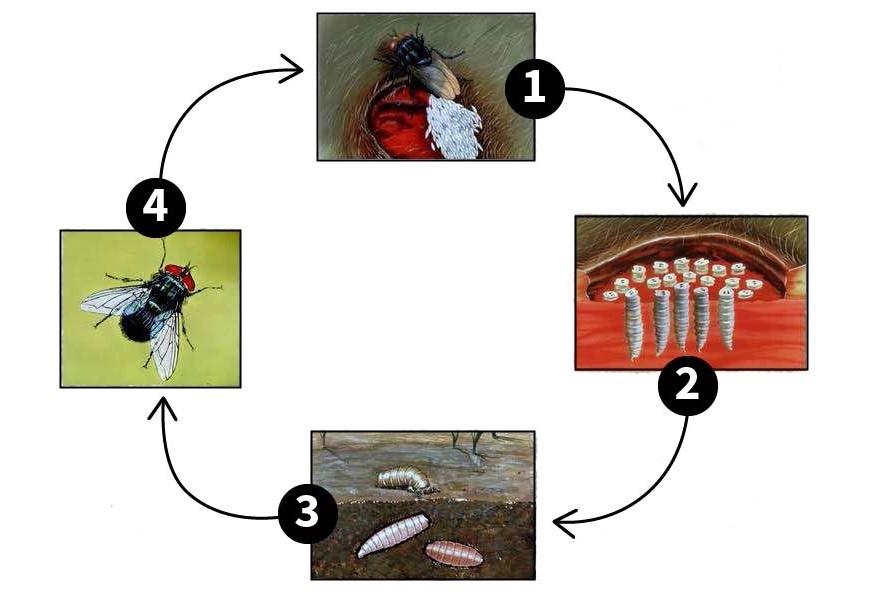
New World Screwworm (NWS) is a parasitic fly native to North America. Female screwworm flies lay their eggs in fresh wounds or mucous membranes of warm-blooded animals. Screwworm larvae (maggots) feed on living tissue, causing severe wounds, intense pain, and sometimes death. This method of feeding is different than other fly species which consume the decaying tissues of dead animals. Screwworms have most often been found feeding on livestock, deer, canines, felines, feral hogs, rabbits, and sometimes birds. Because screwworms can infect many species of livestock and wildlife, they can be difficult to control.
Despite this, screwworms were eradicated in the U.S. in the 1960s. However, since 2022, screwworm infestations have been expanding north across Central America and Mexico. On June 3, 2026 the first detection New World Screwworm in the United States was reported in Zavala county, Texas. Since then additional detections in Texas and New Mexico have been reported by the USDA. Currently, renewed attention to this parasite is of the utmost importance, due to the significant risk to livestock and wildlife in the U.S.
In wildlife, screwworm infestations can greatly decrease the survival of young, especially fawns, which can lead to smaller and less healthy animal populations. In game animals, screwworms can cause poor meat quality, deformities of hides and antlers, and can lead to stunted growth and poor development.
New world screwworm infestations may look like clumps of tiny, bright white egg masses along an open wound, white or beige larvae burrowed deep into the flesh, and large numbers of flies around the wound. The wound itself may be foul smelling, enlarged and inflamed, and/or weeping fluid. Infected animals may bite or lick at these wounds, act lethargic or depressed, and/or become separated from other animals.
If you suspect an animal has an infestation of new world screwworms, please report your sighting with any available photos to the Wildlife Helpline at 866-318-2401 or wildlifehelpline@ncwildlife.gov.
If you suspect a domestic animal has an infestation of new world screwworms, please call your local veterinarian or the NC Department of Agriculture at (919) 707-3250. Find out more information about screwworm in domestic animals from North Carolina.
Additional information about New World Screwworms: