
Rabbit Hemorrhagic Disease Virus serotype 2 (RHDV2)
Rabbit Hemorrhagic Disease Virus serotype 2 (RHDV2) is a highly contagious virus of wild and domestic rabbits, hares, and pikas that causes internal bleeding and acute death. As of January 20, 2026 the North Carolina Department of Agriculture has confirmed the first cases of RHDV2 in domestic rabbits in North Carolina, currently no known wild rabbit cases are known.
RHDV2 is a foreign animal disease that emerged in Europe in 2010 and has since spread through much of Europe, Asia, Africa, and all of Australia. The virus was first documented in wild rabbits of the Southwest United States in March of 2020 and has spread through wild lagomorphs in many of the southwest and mid-west states. The virus is transmitted through shared food and water sources, body fluids, fur, meat, and carcasses. The virus can also be passed by biting insects, contact with the feces of carrion eating birds and mammals, and contact with dogs and humans who have recently contacted ill rabbits. RHDV2 is tolerant to extreme temperatures and repeated freeze-thaw cycles making it difficult, if impossible, to eradicate from the environment. The virus can survive temperatures below freezing to above 120 degrees Fahrenheit for over an hour and can persist for greater than 7 months at 40 degrees Fahrenheit. There is no known cure for RHDV2 in wild rabbits and the disease has an estimated fatality rate of 90% in infected individuals. While the virus can be devastating to wild and domestic rabbit populations and their relatives, it causes no medical concern for humans.
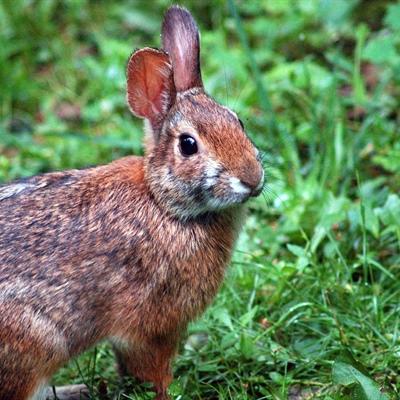
Signs of Rabbit Hemorrhagic Disease Virus serotype 2
- Bleeding from nose, mouth, or rectum
- Loss of appetite
- Lethargy
- High fever
- Seizures
- Jaundice
- Difficulty breathing
- Sudden death
Suspicious Animal
Wild rabbits that are found dead with no visible signs of injury or those found dead with blood around their nose, mouth, or rectum, should be avoided and reported to the N.C. Wildlife Helpline at 866-318-2401 or wildlifehelpline@ncwildlife.gov. As of January 2026, RHDV2 has not been documented in wild rabbits in North Carolina, however there have been documented cases in domestic rabbits in the state. Additionally, there are other infectious diseases that rabbits can transmit to humans and pets that are also of concern.
Impacts on Species
RHDV2 has a documented fatality rate of 90% in infected individuals and is extremely contagious; those rabbits that survive the virus can go on to shed it for an additional 2 months or more. Additionally, studies have shown RHDV2 can reduce rabbit populations between 5% and 70%, and current surveillance in the Southwestern part of the United States estimates about a 50% decrease in rabbit populations. North Carolina is home to three species of rabbits and one of these, the Appalachian Cottontail (Sylvilagus obscurus), is considered a Species of Concern by the U.S. Fish and Wildlife Service and is classified as vulnerable to critically imperiled throughout most of its range. RHDV2 may be a serious threat to the long-term conservation of Appalachian cottontails.
What is the N.C. Wildlife Resources Commission doing?
The N.C. Wildlife Resources Commission monitors mortality events in wild rabbits where cause of death is not readily apparent. If investigation warrants, carcasses may be submitted for diagnostic testing. We are also in contact with avid rabbit hunters asking them to be diligent in their observations of unusual rabbit mortalities. Because RHDV2 may also impact domestic rabbits and potential exists for the virus to spread between the two groups, we also regularly coordinate with both the North Carolina Department of Agriculture and U.S. Department of Agriculture – Wildlife Services to monitor the spread of the disease and any potential impacts. If or when RHDV2 is found in wild rabbits in North Carolina, the Commission will consider all means necessary to limit the spread of the virus and impacts to wild rabbit populations.
What can you do to help?
If you see single or multiple wild rabbits with no obvious cause of death, or with blood around their nose, mouth, or rectum, please notify the N.C. Wildlife Commission via the Wildlife Helpline at 866-318-2401 or wildlifehelpline@ncwildlife.gov. People and pets should be encouraged to avoid contact with all rabbits, hares, and pikas, whether they’re wild or domestic. Pet owners should contact their veterinarian for information regarding RHDV2. Rabbit hunters and trappers should avoid harvesting rabbits that appear ill and wear disposable gloves when handling carcasses. Additionally, any remains from cleaning game should be bagged and disposed of in the trash, not left in the environment where scavengers or other rabbits could contact them. Do not eat, drink, or smoke while handling rabbits and all game meat should be cooked to an internal temperature of 165 degrees Fahrenheit. Wash hands and clothing before and after contact with wild rabbits. Sanitize all tools, equipment, clothing, or other items by laundering, soaking in a 1:10 household bleach solution (1/4 cup of bleach with 2 1/4 cup water) for at least 10 minutes, or use of other approved disinfectant.