Fall-Winter 2026-2027 Furbearer Management Newsletter
Fall/Winter 2026-2027 NC Furbearer Management Newsletter
Volume 20, Issue 2
See us at the NC Trappers Association Convention!
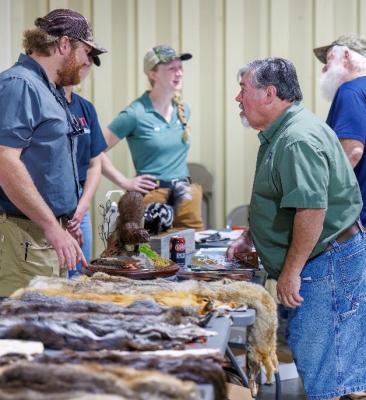
Come visit the NC Wildlife table at the 2026 NC Trappers Convention to get information on our furbearer cooperator program, transportation permits for selling live foxes and coyotes, furbearer species, regulations, research, and much more!
When: September 25th and 26th, 2026. building opens at 7:00 am.
Where: Smithfield Livestock Auction Arena, 526 County Home Rd., Smithfield NC 27577.
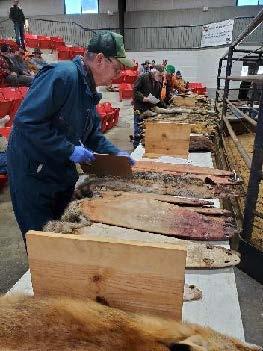
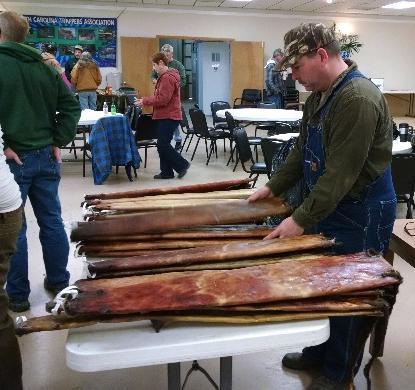
This is one of the largest state trapper’s conventions in the Southeast and is open to the public! In addition to our educational table, there will be trapping demonstrations, fur skinning demonstrations, trapping supply vendors, games for kids, and trap setting contests for all.
For schedule, vendors, and event information, visit: nctrapper.org/2026-convention
Credit: Jonathon Greunke NCWRC
Contacts
Please don’t hesitate to contact us with questions, comments, or to participate in our cooperator programs!
Colleen Offenbuttel
Certified Wildlife Biologist®
Game Mammals Supervisor
Email: colleen.olfenbuttel@ncwildlife.gov
Phone: 919-920-6302
Caitlin Brett
Furbearer Biologist
Email: caitlin.brett@ncwildlife.gov
Phone: 919-609-3392
2026-27 Furbearer Cooperator Program
The NC Wildlife Resources Commission is interested in collecting a variety of furbearer samples and carcasses annually, which allows us to monitor populations, screen for pathogens, and conduct research to better understand furbearer species throughout the state. See below for details on this year’s collection priorities, and instructions on how to participate by submitting samples.
Participants will receive a Furbearer Cooperator patch. We appreciate your support and commitment to continuing sustainable, regulated trapping in North Carolina!
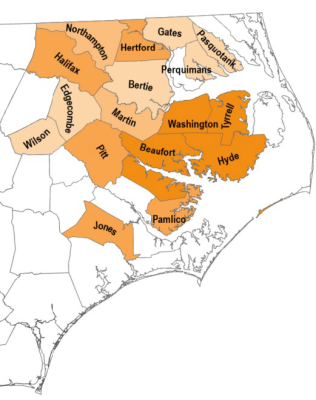
Coastal Coyote Samples
Samples will be used to study canid interactions and genetic structure in Eastern NC. Hair samples can be collected from live or dead coyotes (trapped, hunted, roadkill, etc) any time of year, and are still needed from the following counties: Beaufort, Bertie, Edgecombe, Gates, Halifax, Hertford, Hyde, Jones, Martin, Northampton, Pamlico, Pasquotank, Perquimans, Pitt, Tyrrell, Washington, Wilson.
How to Submit Coyote Samples:
- Approximately 20 hairs with follicles should be collected by pulling (NOT cutting) hairs using tweezers and/or gloves.
- Place hair inside an envelope - one envelope per individual animal.
- Write on the envelope:
a. Your name
b. Date of harvest
c. Location of harvest (latitude/longitude, or nearest crossroads) - Place sample envelope inside a separate mailing envelope and send it to Dr. Heather Evans, 11 W. Jones St., Raleigh, NC 27601
Entire Carcasses (skinned or not): Armadillo, Foxes, Bobcat, Skunks, Weasels, Mink, Muskrat
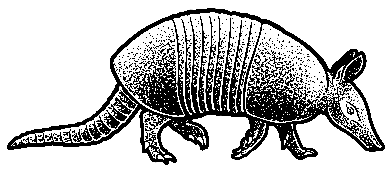
Carcasses are used for a variety of wildlife health studies, which typically involve taking organ samples to screen for pathogens. Pelts and other parts (e.g. scent glands, skulls, feet, etc.) may be removed if the trapper wishes to keep these before submitting. This season we are prioritizing the above-listed species.
How to Submit Carcasses:
- Record the species, location and date of harvest or collection on a waterproof tag or paper inside a ziploc bag; keep this information with each carcass.
- Contact Caitlin Brett at 919-609-3392 or caitlin.brett@ncwildlife.gov to coordinate a drop-off of pick-up details.
Bobcat and Otter Jaws
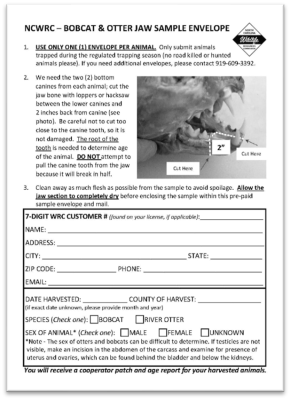
Jawbones must come from harvested bobcats and otters. The lower canine teeth will be extracted and used to assess the age structure of the harvest for each species. In addition to the Furbearer Cooperator patch, participants will receive the age report for their harvested animal(s).
How to Submit Jawbones:
- Request your pre-paid envelopes (one per animal) to be mailed to you by contacting Caitlin Brett at caitlin.brett@ncwildlife.gov or
919-609-3392. - Cut and completely dry the portion of the lower jaw containing the canine tooth and its root. To ensure you include the root, cut the
jawbone at least 2” away from the canine. - Follow instructions on pre-paid envelope to ship - please mail by April 30th, 2026.
For more information on the Furbearer Cooperator Program, visit: ncwildlife.gov/furcooperator
Number of Trappers
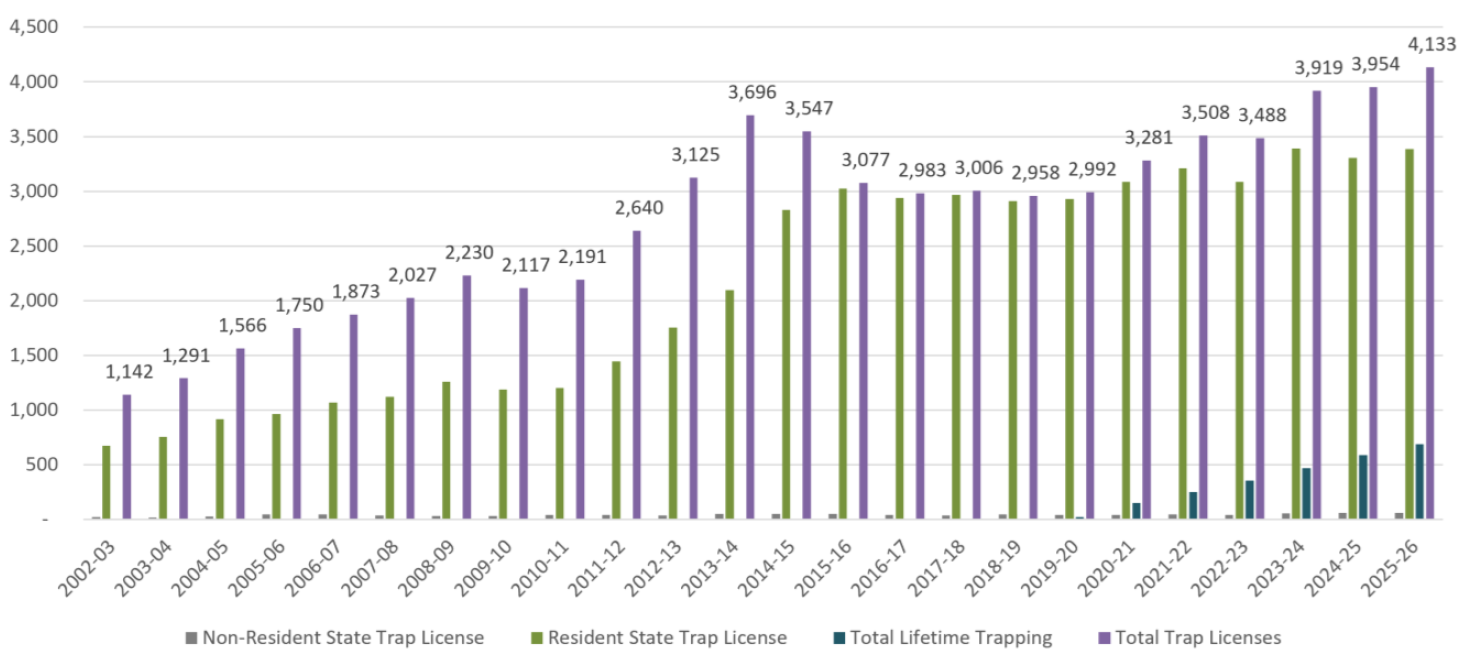
During the 2025-26 season, there were 4,133 licensed trappers, a 4.5% increase in license sales compared to the 2024-25 season (see Figure 1). This was the highest number of licensed trappers since the 1986-87 season.
Trapper Education Opportunities
The Commission and the NC Trappers Association offer free Trapper Education Courses to teach trapping regulations and the basics of trapping techniques, fur handling, and safety.
To search for trapper education courses, go to: Go Outdoors North Carolina. Use keyword “trapper” to search for upcoming courses near you.
Courses are often added throughout the year, based on availability of our volunteer trapper educational instructors.
2026-2027 Regulations Digest
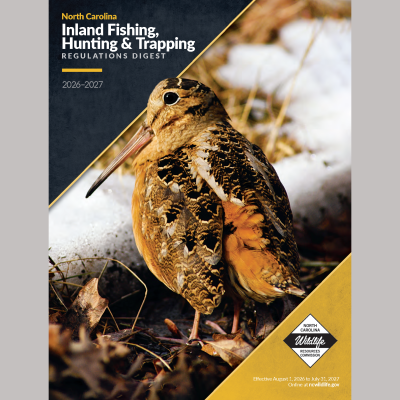
Know before you go! Be sure you are aware and understand the rules, regulations, and other guidelines for hunting, trapping and fishing in North Carolina. The 2026-2027 Regulations Digest also has information on game lands and county local laws.
Visit ncwildlife.gov/regulations to:
- View the digest on-line;
- Download a pdf version of the Regulations Digest to your computer or smartphone;
- Or request a paper copy by mail.
Trapping Season Reminders
There is a uniform statewide trapping season for all 100 counties from October 1, 2026 through February 28, 2027 for the following species:
- Armadillo
- Beaver
- Bobcat
- Coyote
- Groundhog
- Mink
- Muskrat
- Nutria
- Opossum
- Otter
- Raccoon
- Skunk
- Weasel
- Scroll down for season information about trapping foxes
Outside the applicable trapping season, animals can only be trapped under a Depredation Permit. This is a free permit obtained from a Wildlife Enforcement Officer, Wildlife District Biologist, or a Licensed Wildlife Control Agent.
Nutria Note: There is no closed season on nutria east of I-77; A depredation permit is not required to trap nutria in this part of the state.
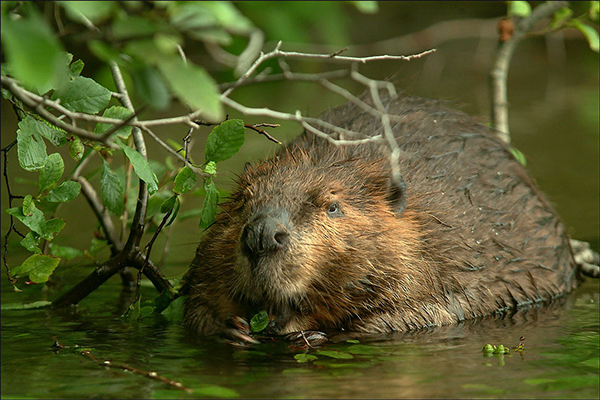
Beaver Note: Landowners whose property is or has been damaged by beavers may take beaver on their property anytime by any lawful method without obtaining a depredation permit. The landowner may obtain assistance from other persons, including licensed trappers, by giving those persons permission to take beaver on the landowner’s property. The beaver pelt, carcass, and parts can be sold by licensed trappers.
Resident Lifetime Trapping License
North Carolina residents can purchase a Lifetime Trapping License. The cost is $370 and all proceeds from the sale of this license go to the Wildlife Endowment Fund.
Fox Trapping Seasons
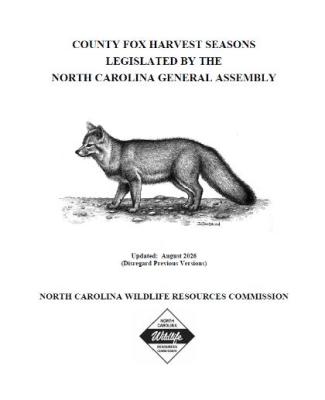
As of September 1st, 2026, the NC General Assembly did not pass any local laws that opened up any new counties to fox trapping. As a reminder, the NC Wildlife Resources Commission does not have the authority to create fox trapping seasons; only the NC General Assembly has that authority. There are 55 counties with fox trapping seasons in North Carolina. Outside these 55 counties, you cannot trap foxes during the regulated trapping season and any fox captured must be released in those 45 counties without a fox trapping season. For more information on fox hunting and trapping seasons, including county-specific restrictions and season dates please go to: ncwildlife.gov/foxseasons
Selling Your Furs
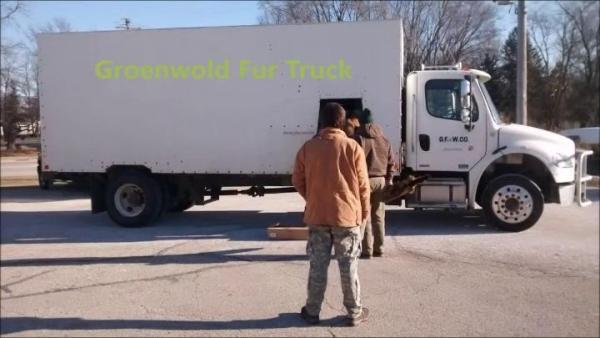
To find where you can sell your fur, visit our Selling Fur page. It has information on local fur dealers, fur pick-up schedules & locations, and fur auctions. This information is updated throughout the trapping season.
Trapping Live Foxes and Coyote
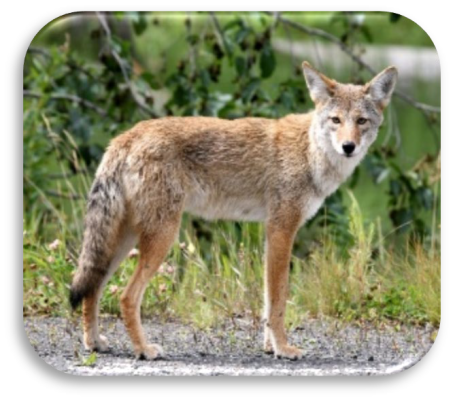
- A transportation permit is required prior to taking possession of live foxes and coyotes for live sale to licensed fox preserve.
- Licensed trappers and any individual(s) transporting foxes and coyotes for live sale shall have a current and valid transportation permit prior to taking possession of the live foxes and coyotes, including removing the animal from the trap.
- This free permit can be found in the same place as fur tags. Go to https://www.gooutdoorsnorthcarolina.com
- Then select the square that says “Buy Licenses or Obtain Lifetime License”
- Then select the green “Regulated Activity Permits” tab
- Then scroll down to Fox-Coyote Transport Application.
Reporting Live Foxes and Coyotes
- Licensed trappers shall keep accurate written records, on a form provided by the NC Wildlife Resources Commission, for each fox or coyote sold or transferred to licensed fox preserve.
- Download the report form, or you can use your account in Go Outdoors.
- Live-trapped foxes and coyotes shall not be held for more than 30 days after capture and shall be provided drinking water, food of a type and quantity appropriate for the species, and shelter that protects the foxes and coyotes from direct sunlight and precipitation.
Need to Obtain or Renew Your Fox-Coyote Transport Permit?
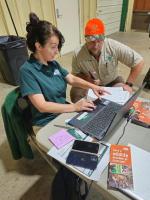
Come visit Wildlife Commission’s RAPS supervisor Christina Stylianos at the NC Trappers Convention on Friday, September 25th to submit your reports and renew your permit!
Trapper Identification Number (TIN)
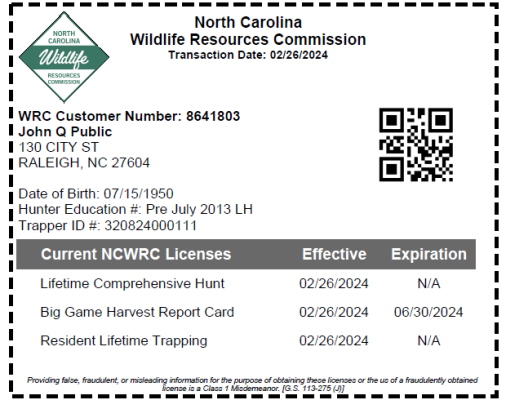
The Commission issues each trapper a Trapper Identification Number (TIN) at the time they purchase or renew their trapping license. This TIN is printed on your license (see picture on next page for example).
Either the TIN or Wildlife Control Agent (WCA) license number and Commission telephone number (800-662-7137), or the trapper’s name and address can be used on trap tags. The license number issued to licensed WCAs is equivalent to a TIN and can be used on the trap tags. See trap tag examples below.
If a trapper places a trap on the property of another, the Commission is required to disclose the identity of the trapper to the landowner where the trap is located at the landowner’s request.
The trapper identification number (TIN) is located below your date of birth on your license card, which you can print yourself as a pdf.
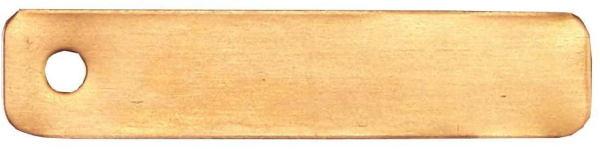
Option 1: Trapper’s name and address
Option 2: Trapper Identification Number (TIN) or
WCA license number, and WRC phone number at 1-800-662-7137
Trapping Best Management Practices (BMPs)
Trapping BMPs are carefully researched recommendations designed to ensure animals are humanely captured. Developed as part of the largest trap research effort ever conducted, BMPs feature the latest scientific information about trapping techniques and equipment, along with practical advice from experienced trappers and wildlife biologists.
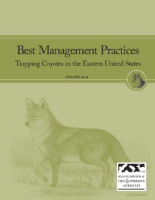
BMPs are intended to inform people about traps and trapping systems considered to be state-of-the-art in animal welfare, efficiency, selectivity, and practicality.
The BMPs serve as a guide to inform trappers about trap-types they should consider using for capturing a specific furbearer, including bobcats, coyotes, beaver, and raccoons!
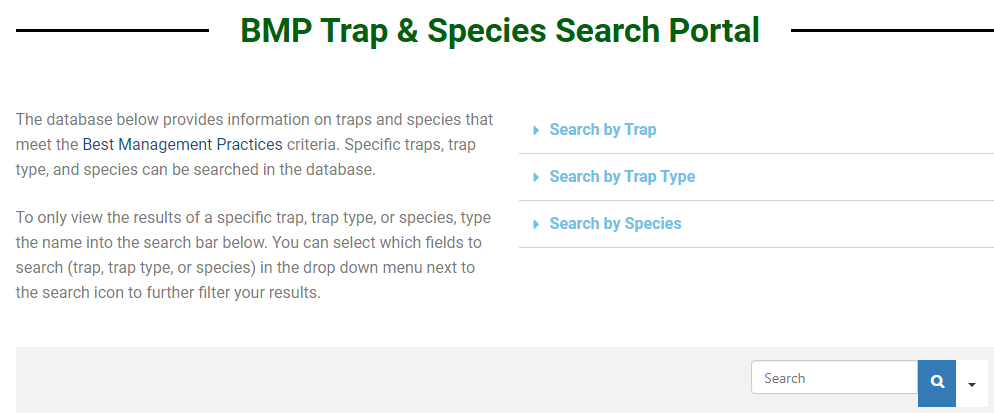
Trapping BMPs exist for 22 species of furbearers. To make it easy to find a BMP-approved trap, the website has a trap search portal, where you can search for BMP-approved traps by trap-type (e.g., foothold, bodygrip), species, or trap brand.