
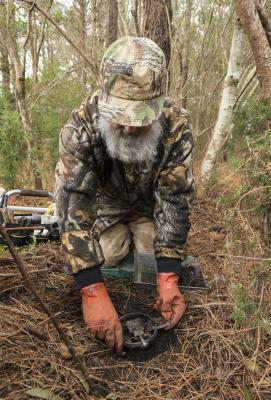
Predators and non-native animals can negatively impact population dynamics of native species and habitat quality. The Predator Control activity is used to monitor populations of predators and invasive species on an enrolled tract of land, and to define measures to moderate the abundance of targeted species on the property. It is critical to understand that randomly killing an individual predator when an opportunity presents itself does not qualify for this management activity. Rather, making concerted efforts to monitor populations of predatory and non-native species, following a plan to euthanize targeted species, and keeping records of the number of individuals removed are all requirements for this management activity.
The following items will be considered when developing a Wildlife Habitat Conservation Agreement (WHCA) which includes Predator Control as a qualifying management activity for the Wildlife Conservation Land Program (WCLP). Due to the transient nature of predators and non-native species of fauna, Predator Control will be included in a WHCA only under special circumstances. Monitoring requirements will be provided by a NC Wildlife Resources Commission biologist and defined in the WHCA. Participating landowners must agree to the requirements and understand the expected results of this management activity.
Methods of Predator Control
Predator hunting can be used to reduce the number of nest predators and direct predators. Predators are often shot as targets of opportunity by someone hunting other species, but this method does not meet the intent of the Wildlife Reserve Land (WRL) qualification. To have an impact on local populations, predators must be monitored throughout the year and hunting must be conducted in an appropriate manner when the problematic species are most susceptible to hunting. Records must be kept that track monitoring, hunting effort, and the number of predators removed. Follow-up will be required to address new predators that move onto the property. All applicable laws and regulations must be adhered to while implementing this management activity.
Predator trapping is commonly used to capture and euthanize individual mammalian predators. These efforts can be conducted during the open trapping season, which has legal requirements that must be adhered to as a qualification of the WCLP. Typical goals for implementing a trapping program include reduction of nest predators (e.g., raccoons, opossums, and skunks) and reducing populations of direct predators (e.g., coyotes, bobcats, and foxes). Populations of the targeted species must be monitored on the property pre- and post-trapping efforts. The number of trap days and all animals captured must be recorded on the Predator Control activity log. Trapping is often used in coordination with hunting efforts to have the best results.
Feral swine, often referred to as “wild boar” or “feral pigs,” cause significant damage to native plant communities as they “root up” the soil in search of food. They are also hosts for many diseases and compete with native wildlife species. Swine reproduce quickly with some females being reproductively mature at 6 months of age. Groups of swine, known as sounders, are transient and will move to other areas when pressured by human activity. Swine can become wary of control measures such as traps that are designed to only capture a few individuals instead of the entire sounder. These “trap-shy” pigs are challenging to capture. Trapping or shooting can be used to keep populations of feral swine in check.
To meet the criteria for WCLP a feral swine control program must include monitoring, trapping, and euthanizing entire sounders. Shooting will only be incorporated into the program to dispatch already trapped swine and to target remaining trap-shy individuals after trapping efforts are exhausted. This will ensure that the population is indeed being impacted and not just being pushed to other locations. Detailed methodology will be prescribed in the WHCA and all monitoring efforts, trapping days, and animals euthanized must be recorded in the activity log. Note that a free Feral Swine Trapping Permit is required.
In specific situations predator and feral swine control measures can benefit habitat quality and native wildlife populations. Opportunistic shooting and random trapping efforts have little or no impact on populations of targeted species and will not meet WRL requirements. All laws and regulations must be adhered to as part of this activity.