
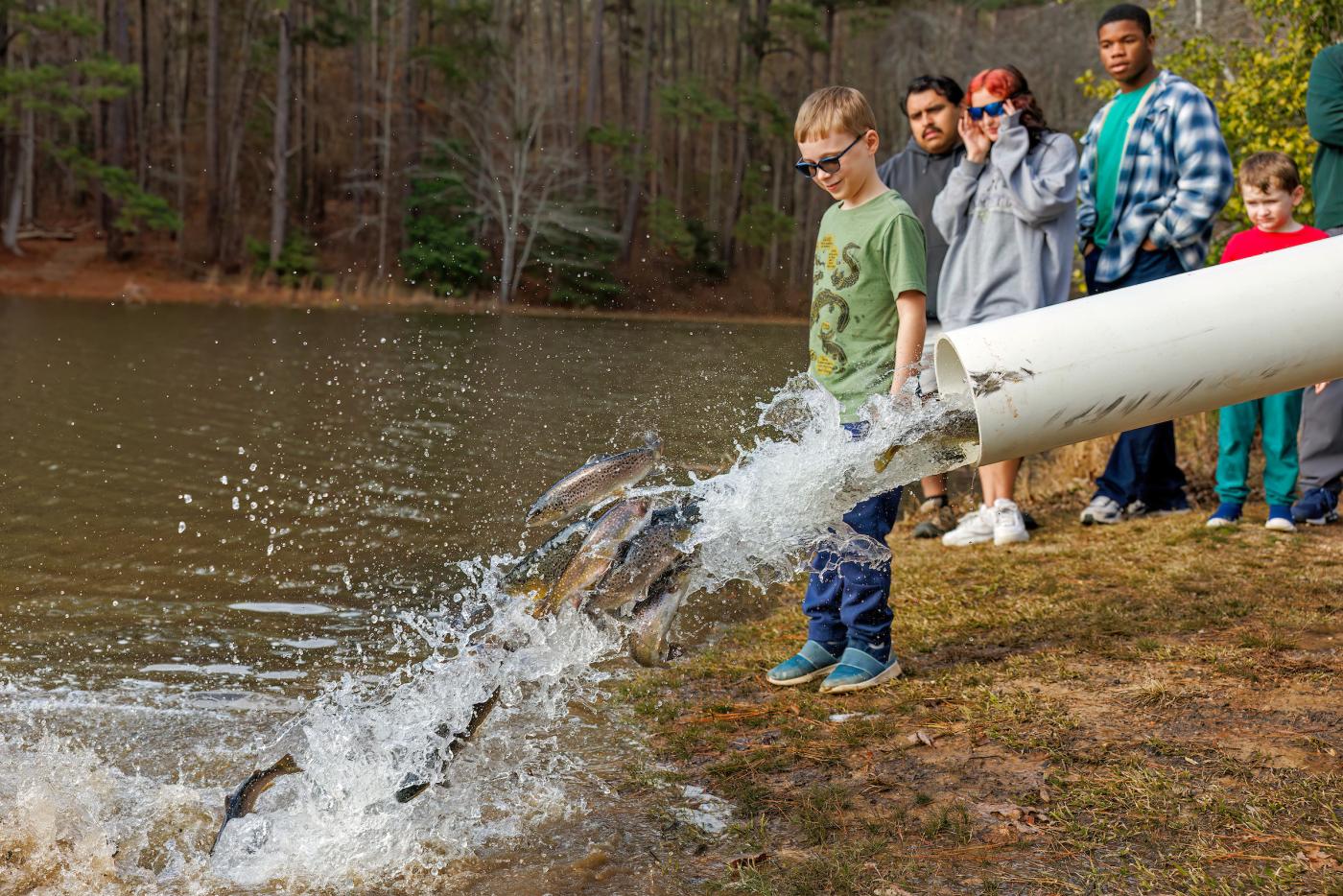
The N.C. Wildlife Resources Commission (NCWRC) will wait until November to stock Delayed Harvest Trout Waters. Impacts from an unusually hot summer, coupled with the ongoing drought conditions and damage from Hurricane Helene, have caused lethally high-water temperatures flowing into the state’s mountain trout hatcheries, thus reducing the number of available fish to stock. As water temperatures cool, Commission staff will be able to determine the number of trout available for stocking this fall and adjust the schedule as necessary.
“It’s been a brutal summer for these cold-water fish,” said NCWRC’s State Fish Production Supervisor David Deaton. “The water temperatures coming into our hatchery have been at times, in the mid-to-high 70s. Trout cannot survive that temperature. They get stressed, become susceptible to disease and many die.”
Staff estimate that since June they’ve lost around 70% of the fish at Armstrong State Fish Hatchery, which were being grown to catchable size for the upcoming Delayed Harvest trout stocking season.
Armstrong is currently the primary NCWRC state hatchery producing trout since the late-2025 closure of the Bobby N. Setzer State Fish Hatchery for major renovations. Prior to renovations beginning, NCWRC announced that only 35% of the usual number of trout would be available for stocking until the project was completed.
“That number was based on ideal conditions, and it’s been anything BUT ideal,” said Deaton.
In 2024, Armstrong sustained major damage from Hurricane Helene. Landslides caused the creeks that supply water to the hatchery to become wider and shallower and destroyed the tree canopies that provided shade, all of which contributed to increased water temperatures in the creeks that supply water to Armstrong.
“We knew we’d have heat issues with Helene taking away shade and reducing water depths,” said Deaton. “Then we were hit with a tough heatwave during a severe drought this summer that continues to impact our hatchery today. Every effort we have made to keep our stocking numbers up has been impacted by these unforeseen environmental factors.”
NCWRC supplemented the numbers of trout stocked during the spring stocking season with fish purchased from private hatcheries. However, efforts to buy additional privately grown fish for this fall to offset this summer’s losses at Armstrong have proven unsuccessful.
“Most of the trout grown at private hatcheries had already been spoken for, and many of those hatcheries are also losing fish to the same environmental factors that we are dealing with,” said Deaton.
Deaton does not know how many fish will be stocked in November yet, as the heat continues to impact the remaining fish at Armstrong and staff won’t be able to conduct a census of the hatchery’s remaining trout until sometime in October.
“November will be a better time to stock, since the water will be cooler, and it will be less stressful on the fish. It will also allow the fish we have to grow a little bigger. While we’re confident that enough fish remain at Armstrong to conduct the November stocking, we won’t know how subsequent stockings might be affected until the population inventory is completed.”
Setzer remains on track to reopen at the end of 2027 with enhancements to improve water quality, lower temperatures and utilize a more efficient use of water. Additionally, efforts to mitigate watershed damage upstream of Armstrong hatchery are underway through the NCWRC’s new Hurricane Helene Restoration Division.
“We recognize the importance of trout fishing to our anglers as well as the economy of western North Carolina,” said Mountain Fisheries Supervisor Kinnon Hodges. “We appreciate everyone’s patience with the interruptions that are occurring to our stockings as we work towards making our cold-water hatcheries more resilient to climate impacts so that future generations of anglers can continue to enjoy the sport of trout fishing.”
Under Delayed Harvest Trout Waters regulations, only catch-and-release fishing for trout is permissible from program waters between Oct. 1, 2026, and June 5, 2027. No natural bait may be possessed, and anglers can fish only with artificial lures with one single hook. An artificial lure is defined as a fishing lure that neither contains nor has been treated with any substance that attracts fish by the sense of taste or smell.
Under normal circumstances, NCWRC staff stock Delayed Harvest Trout Waters from fall through spring with high densities of trout to increase anglers’ chances of catching trout. Delayed Harvest Trout Waters, posted with diamond-shaped, black-and-white signs, are popular fishing destinations for anglers who enjoy catch-and-release trout fishing.
Anglers should be aware that stocking locations along streams may be different than in the past due to hurricane damage impacting stocking and angler access.
For more information on trout fishing and stocking, visit ncwildlife.gov/trout.
Follow the progress of the Setzer renovation, at ncwildlife.gov/setzer.
Read updates on the 10-year Hurricane Helene wildlife habitat restoration plan.