
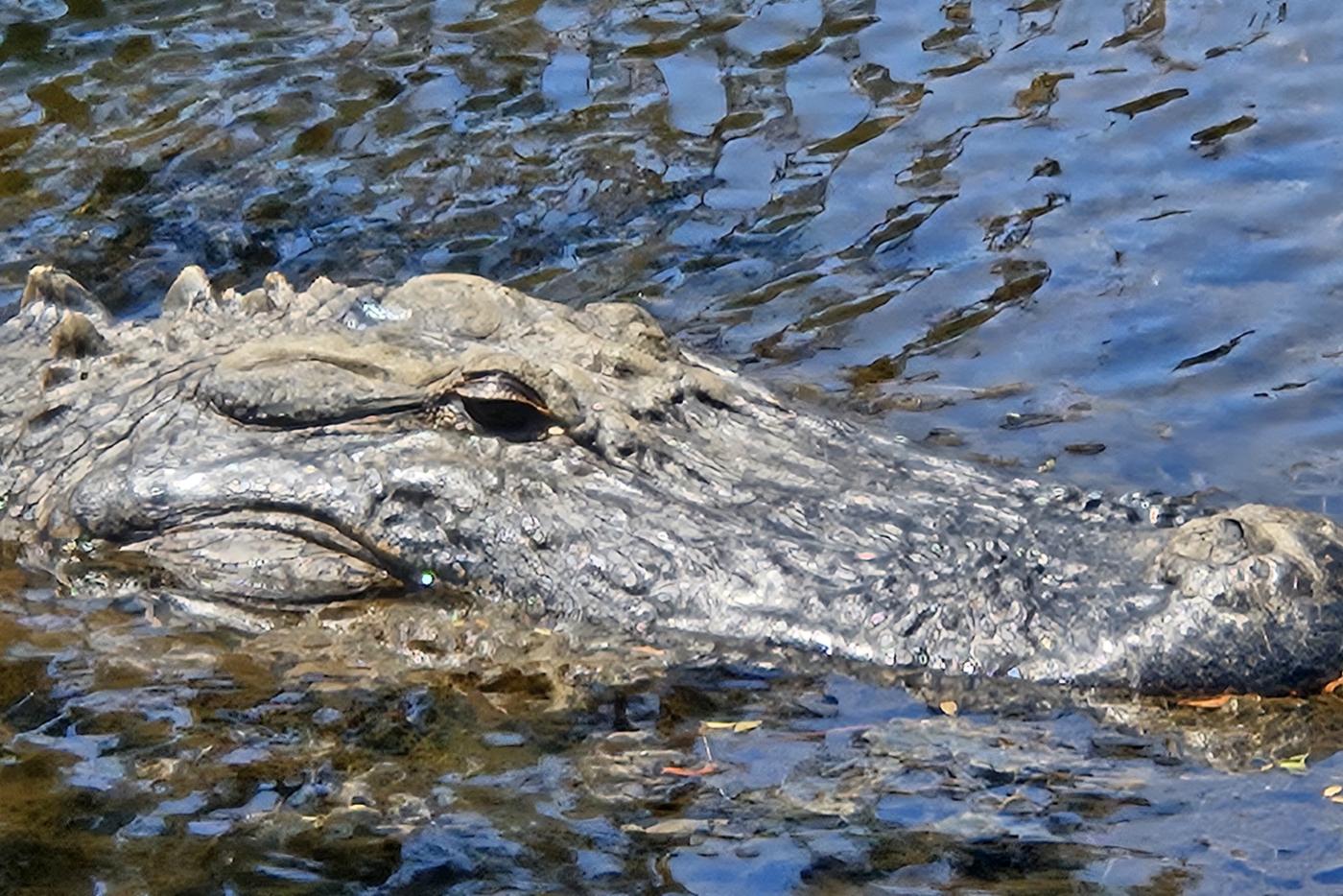
The North Carolina Wildlife Resources Commission (NCWRC) is advising coastal residents and visitors not to feed or interact with alligators. NCWRC’s Wildlife Helpline biologists are currently receiving several calls per day as public encounters with alligators increase during the spring through summer. NCWRC advises residents and visitors to be GatorWise® to safely coexist with this native species in coastal counties.
“May and June are mating season for alligators which means they are moving around more,” said NCWRC’s Alligator Biologist Alicia Wassmer. “Warmer weather also brings more people outside, so reports of encounters increase.”
Wildlife Management District Biologist John Henry Harrelson covers nine counties in the southern Coastal Plain, including Brunswick and Columbus. He is encountering more alligators with less fear of humans – a dangerous consequence of being fed by people.
“People feeding alligators ultimately leads to those animals seeing humans as a potential source for food,” said Harrelson, who is currently conducting several site visits per week related to alligators. “Naturally alligators are shy, but through feeding, alligators can lose their fear of humans and that leads to a possible negative interaction between people and wildlife. Communities are reaching out to us concerned about animals that are approaching or being ‘aggressive’ towards humans. Most of these behaviors are directly linked to animals being fed by people.”
Chris Kent is the district biologist for the 12-county region, District 2, which includes the coastal counties of New Hanover, Pender, Onslow, Jones, Craven, Carteret, and Pamlico. He’s experiencing an increase in calls this time of year related to alligators in neighborhood retention ponds and ditches. Kent says, “relocation does not equal rescue.”
“We typically do not relocate as many alligators do not survive the relocation or they try to find their way back and sometimes get hit by vehicles in the roadways. For emergency situations like in a swimming pool, against a house, under a vehicle in a parking lot, in a garage, or obstructing a public roadway, we will attempt to capture and release an alligator into the closest natural waterbody.”
District Biologist Dallas Shoemaker manages the northernmost coastal portion of the state where alligators are most likely to be spotted in Dare, Tyrrell, or Hyde counties.
“Most of our human-gator interactions are at wildlife refuges, particularly Alligator River National Wildlife Refuge,” said Shoemaker. “We've had issues with visitors there feeding alligators and bears.”
Alligators are native to N.C.’s coastal region and naturally fear and avoid close encounters with humans. However, being fed by people – intentionally or unintentionally – teaches alligators to associate humans with an easy meal. It is a violation of state law to feed alligators.
While alligator populations grow slowly here at the northern edge of the species’ range, the annual rise in numbers of calls to the N.C. Wildlife Helpline concerning alligators is attributed to the fast-growing number of people in places where alligator encounters are more likely. Human development in coastal regions of southeastern states, including areas where alligator habitat occurs, is increasing at exponential rates to meet the residential and recreational needs of growing human populations.
“This loss of natural habitat and constant influx of newcomers, including many who have never lived in places with alligators, has amplified the need for state wildlife resource agencies to connect residents and visitors with vital information on how to live responsibly with alligators,” said Wassmer.
In response to the rising number of human-alligator encounters, NCWRC developed GatorWise in partnership with 10 other wildlife agencies in states where alligators live. Modeled after BearWise®, the program provides reliable information and resources about how to avoid human-alligator conflicts and coexist safely with alligators. Residents and visitors can follow the six GatorWise Basics to protect both people and alligators in any state.
Assume alligators are present
- Alligators can live in any water body within their range.
- Alligators are very good at hiding. They will see you before you see them.
- There could be alligators in places you have never seen them before, especially after storms or floods.
- The best way to stay safe around alligators is to keep your distance.
Never feed alligators
- Feeding alligators on purpose or by accident may cause alligators to associate people with food.
- Intentionally feeding alligators is irresponsible, illegal in most states, and dangerous for you and others.
- Feeding other wildlife near water can attract alligators and cause them to lose their natural fear of people.
Don’t dispose of fish or food scraps in water
- Throwing fish scraps in the water is one of the most common ways that people unintentionally feed alligators.
- Properly dispose of bait, fish scraps, and food items away from alligators and other wildlife.
Never harass, capture, or handle an alligator
- Attempting to approach, capture, or handle alligators increases your risk of injury or death.
- These behaviors are irresponsible, illegal, and dangerous, regardless of the alligator’s size.
- View and photograph alligators from a distance.
Be responsible for people and pets in your care
- Alligators do not know the difference between pets and their natural prey.
- Keep pets on a leash and away from the water’s edge.
- Supervise small children near water.
Maintain awareness anytime you are in or near water
- Always observe alligator warning signs.
- Stay away from the water if you see an alligator.
- Avoid swimming in areas with dense vegetation. Alligators hide in vegetation in and around the water.
- Only swim during daylight hours. Alligators are most active between dusk and dawn.
- During summer months, female alligators may protect nests and hatchlings from perceived threats, including people getting too close.
- If an alligator approaches you, immediately move a safe distance away. Report the situation to NCWRC.
“I encourage people to enjoy the opportunity to see an alligator in the wild but view them from a safe and respectful distance,” said Wassmer. “The only thing you should try to catch is a photo but use the zoom and give them room.”
The American alligator is a federally protected species. If a situation involving an alligator requires immediate action, such as if one becomes trapped in a swimming pool or wanders onto a public road and refuses to move, only an authorized NCWRC employee or licensed agent can remove it legally. Call the N.C. Wildlife Helpline biologists at 866-318-2401 Monday through Friday, 9 a.m. – 5 p.m. with questions or concerns about alligators. Report violations or after-hours emergencies to Wildlife Enforcement at 800-662-7137.