
There was a time when North Carolina’s French Broad River Watershed in western North Carolina was home to more than 76 different fish species, thriving in its clean, clear water. Heavy industrial pollution and infrastructure development (e.g. dams that blocked spawning migrations) over the past century have cut that number by half.
In the 1960s, a portion of the river between Brevard and Hendersonville had been depleted of free oxygen, making it uninhabitable for any aquatic life – leaving the once bountiful waterway destroyed and devoid of life
The river’s recovery began with the passage of the Clean Water Act in 1972. Water quality dramatically improved as manufacturing plants along the river shut down, like the Ecusta Paper Mill, Sayles Biltomroe Bleachery, Beacon Mill and American Enka Company.
Beginning in 2022, the N.C. Wildlife Resources Commission (NCWRC) started a reintroduction project, catching certain fish species from below the three dams located on the French Broad River, and moving them upstream. So far, NCWRC has reintroduced the tangerine darter, gizzard shad, freshwater drum, and the sucker fish species black buffalo, smallmouth buffalo, and smallmouth redhorse. For more than 100 years prior, there were no records of those species upstream of the dams – only downstream.
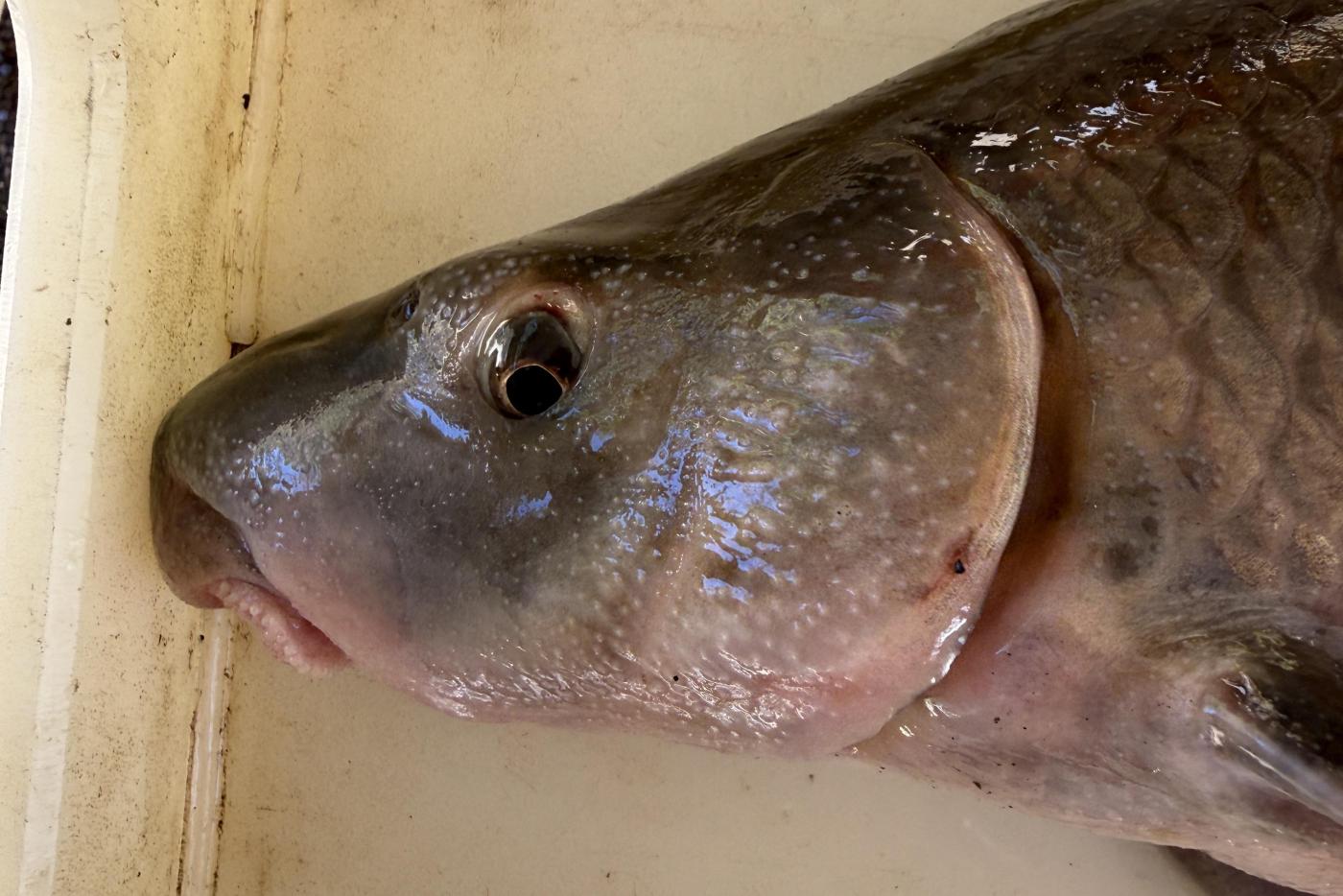
And now, a new discovery. On October 21, 2026, a fish species that has never been found in the French Broad River was netted by state wildlife biologists - a massive 29-inch male blue sucker near Hot Springs.
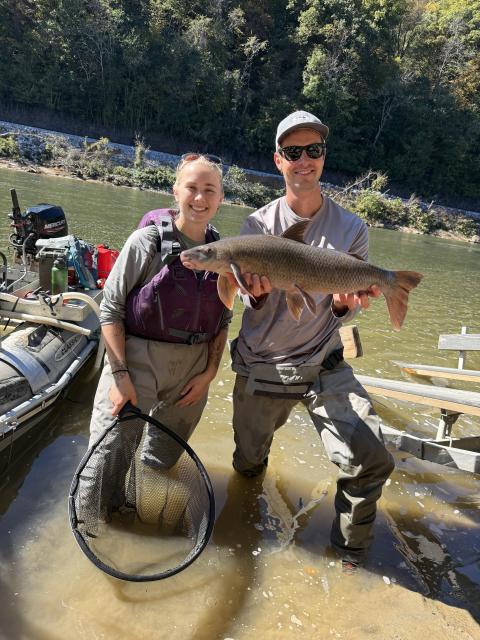
“This giant sucker fish species can live longer than 100 years and can reach sizes up to 40 inches,” said Fisheries Biologist Luke Etchison. “They prefer deep and swift water which now makes the French Broad River an ideal home for this species.”
Why Suckers Matter
“Blue suckers are what we call an indicator species,” said Etchison. “When suckers are found, it suggests we have good water quality. It’s also a sign that the French Broad River is recovering from Hurricane Helene devastation.”
A recent study by Appalachian State University researchers and NCWRC biologists discovered that multiple sucker species are a host for the federally endangered Appalachian elktoe. “The elktoe larvae typically attach to gills of these suckers for nutrients for a few weeks and hitch a ride to a new spot and drop off. It is generally not harmful to the fishes. This mussel is only found in western North Carolina, and its presence and expansion are likely tied to healthy sucker biodiversity and populations,” said Etchison.
Mussels like the Appalachian elktoe are filter feeders that contribute to water purification by removing suspended particles and pollutants. Healthy mussel populations, along with their fish hosts, indicate good water quality and a healthy ecosystem. Conservation of this species depends on access to free flowing rivers.
Fisheries Biologist Dylan Owensby said he’s been part of many exciting discoveries, but this one topped them all. He was in the boat when the blue sucker was netted and pulled from the river.
“My first reaction was confusion for a second and then after realizing what it was, I was shocked and in a little bit of disbelief,” Owensby said. “I knew that there were no records of it in North Carolina, so it definitely felt special. I took a few pictures of it in the live-well right away just in case it jumped out of the boat!”
For years, Owensby and Etchison joked about catching a blue sucker, both knowing the chances were less than slim. “Every time we’d prepare for another monitoring, Luke would kiddingly say, ‘I can’t believe we’re finally going to catch a blue sucker today!’ prior to launching the boat. So, as we were driving up to the bank, I yelled to Luke that I owed him an apology! Only a couple of weeks earlier, I told him that I didn’t think catching a blue sucker in North Carolina would ever happen.”
Biologists believe the blue suckers are expanding from Tennessee rivers because of the improved water quality. And they aren’t the first. So far biologists have found six other fish species previously unknown or lost to this watershed:
Snubnose darter
White bass
Brook silverside
Stonecat madtom
Mountain madtom
American brook lamprey
There are other wildlife returning to the French Broad River too, including turtles, crayfishes and mussels, all seeking clean and ecologically friendly waters.
State wildlife biologists regularly monitor the French Broad River as part of a long-term restoration data-gathering project to record fish community trends and assess change over time. It also allows them to assess species reintroductions and increases likelihood of detecting rare and imperiled species.
The French Broad River has the most state-listed fish species of any river basin in North Carolina.
Importance of Spawning
Suckers are considered the “Salmon of the South.” Like salmon out west, many sucker fish have a spring spawning migration that is very important for the river ecosystem health. When they travel from the downstream larger, more productive water, into the headwaters and tributaries, they bring nutrients that help smaller, less-productive streams. These spawning migrations are critical for ecosystem function and benefit everything from aquatic vegetation and aquatic insects to trout and bass. Blue suckers have a spring spawning migration like many suckers and are significantly impacted by the presence of dams, which block the spawning migrations.
The Future of the French Broad
“The French Broad River Watershed is identified as a priority watershed in our Wildlife Action Plan,” said Etchison. “We are hopeful that our reintroduction efforts and future dam removals will restore these important sucker migrations to the upper French Broad River and uplift the entire French Broad ecosystem.”
State wildlife staff are partnering with Clemson University and U.S. Forest Service to track sucker fish species movement and populations in the lower French Broad River to better understand their recovery post-Helene and learn how to better conserve this important group of fishes.