
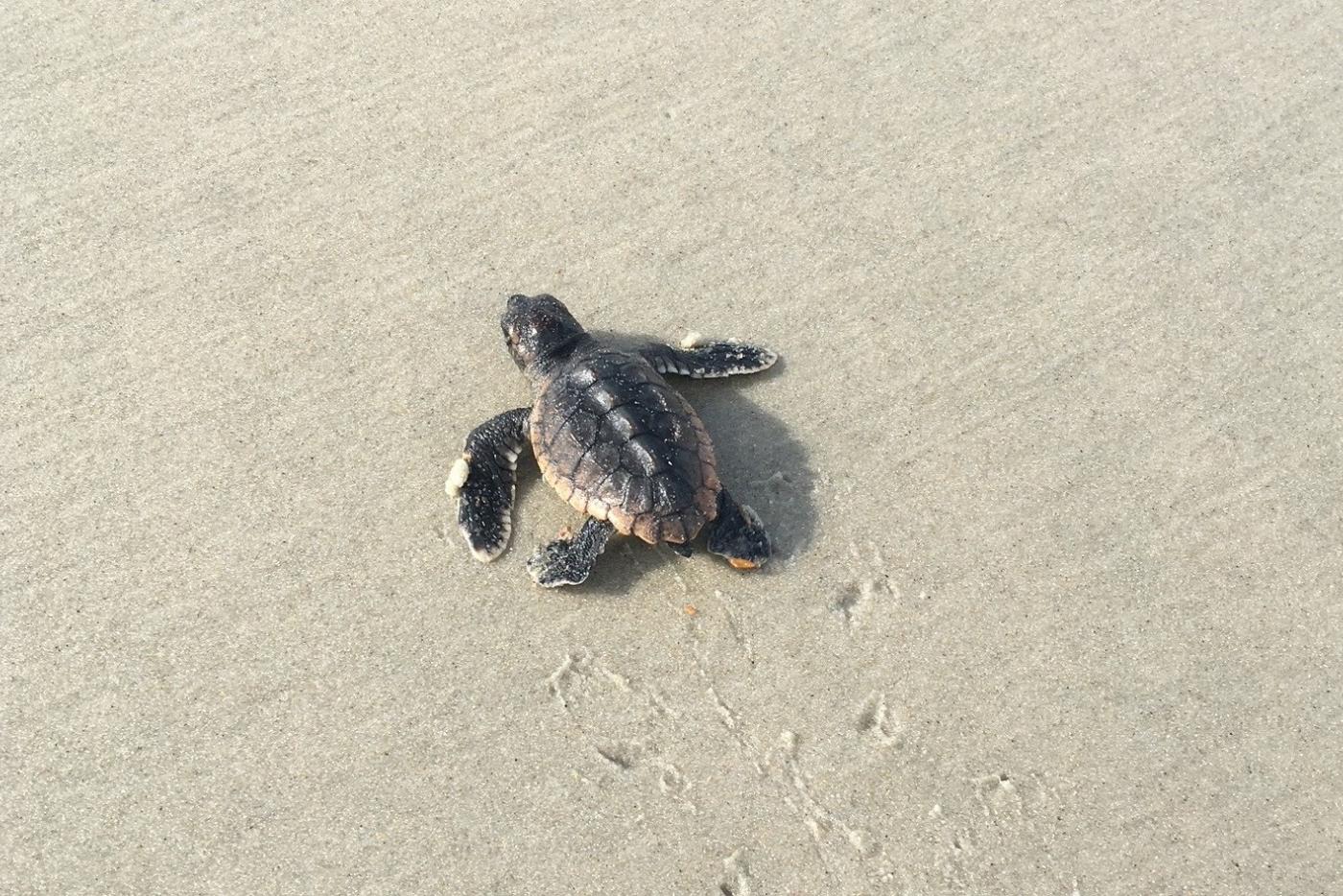
If you spent time along the North Carolina coast this summer, chances are you spotted roped-off areas near the dunes marked with signs protecting sea turtle nests. If it seemed like there were more nests than usual, you were onto something.
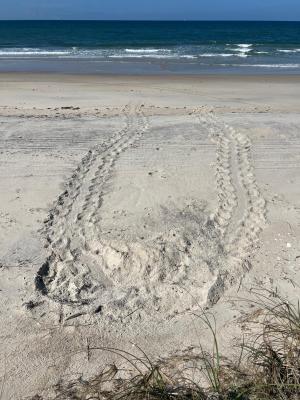
According to N.C. Wildlife Resources Commission Biologist, Dr. Matthew Godfrey, loggerhead sea turtles laid 1,970 nests along the coast this year. That’s the second-highest count on record, trailing only the 2,293 nests recorded in 2019. Loggerheads account for roughly 95% of all sea turtle nests in North Carolina.
Green turtles also had a standout season, with 65 nests recorded, second only to the 97 nests documented in 2023. Godfrey noted that green turtles were once rare in the state, with the first nest documented in 1980. By comparison, loggerheads have been nesting on North Carolina beaches for over a century.
In addition to high nesting numbers, Godfrey reported a 75% hatching success rate, a strong figure likely boosted by a quiet hurricane season. "Coupled with such low hurricane numbers this year, [the conditions] meant that the nests could produce a lot of hatchlings," Godfrey said.
A dedicated network of observers marks sea turtle nests along the entire coast and monitors them throughout incubation. This network includes volunteers and partners from N.C. State Parks, the National Park Service, and Camp Lejeune.
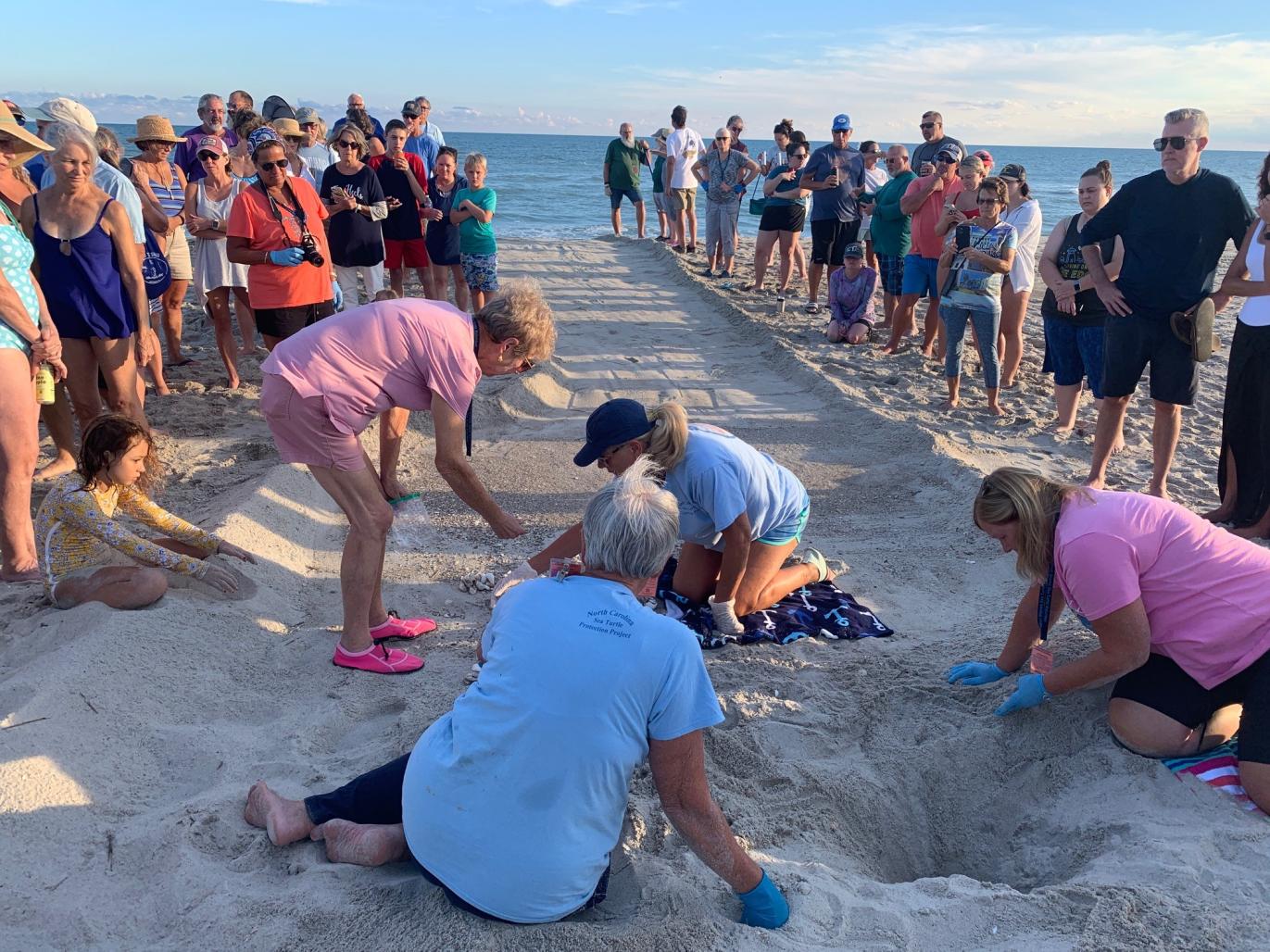
"Everybody loves turtles," Godfrey said. "We have high interest and high involvement."
Godfrey also shared that a familiar face returned to the coast this summer: a loggerhead first tagged while nesting on Bald Head Island in 1991. She was spotted nesting there again in 1996, then went undetected until 2010, when biologists identified her via an eggshell DNA sample collected from Cape Lookout National Seashore. She has been returning to Cape Lookout ever since.
Because sea turtles typically nest at night and are difficult to track, observers collect DNA samples from every nest to help biologists monitor where and how often individual turtles lay eggs. Those samples revealed that this particular loggerhead nested at Cape Lookout in 2012, 2015, 2018, 2020, 2023, and 2026. This means she has been reproductively active for at least 36 years.
“She’s has had really high hatching success even though she has been producing eggs for at least 36 years,” Godfrey said.
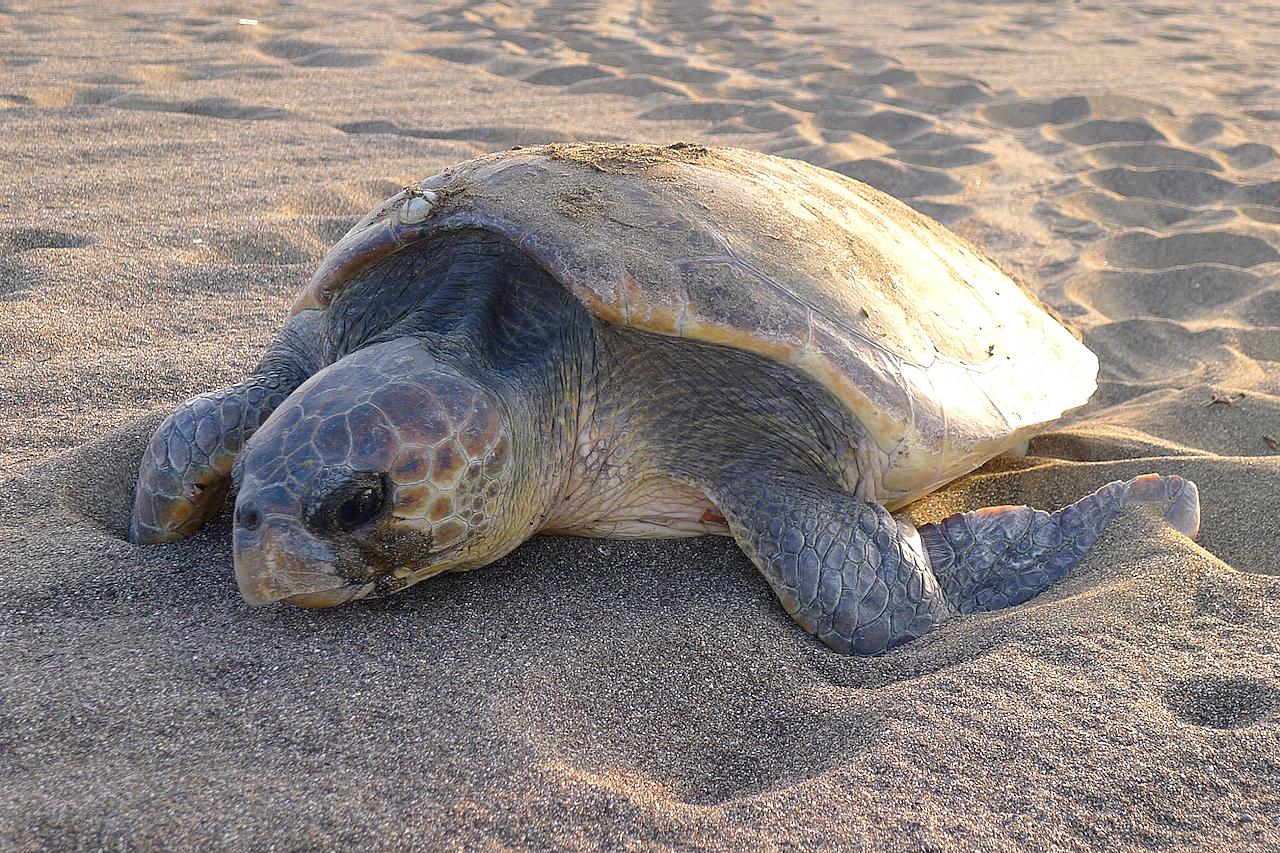
Ongoing research will help biologists learn more about how the age of a mother sea turtle is related to hatching success and other reproductivity factors.
To learn more about sea turtles and volunteer opportunities, visit nc-wild.org/seaturtles.
Photos by Matthew Godfrey.