
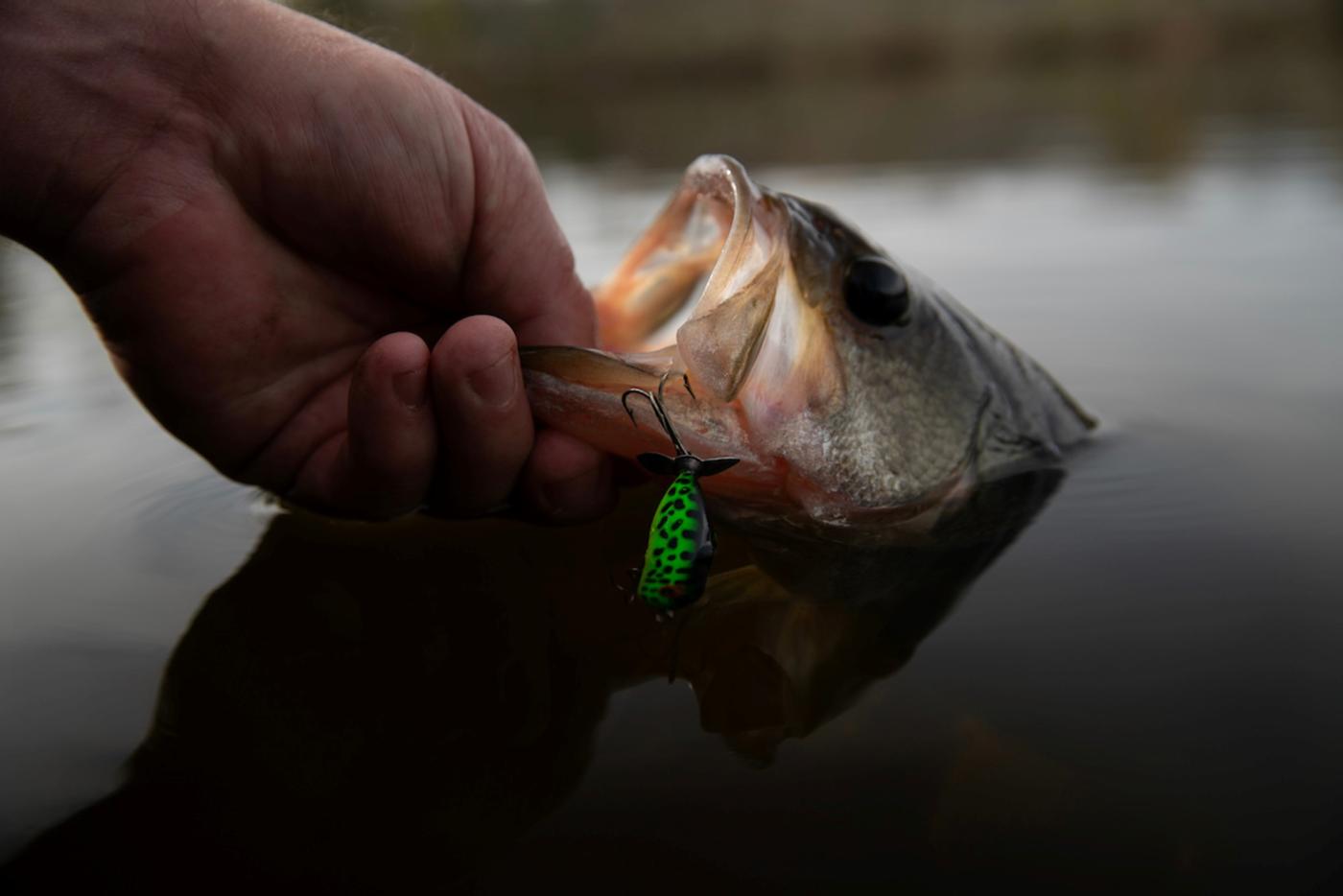
Fishing is a big deal in North Carolina. How big? Economically speaking, black bass fishing alone provides a $2.6 billion impact to the state’s economy, according to recent research conducted by the Wildlife Commission’s Social Science Research Unit in 2025. Black bass fishing in North Carolina consists of fishing for five species including largemouth bass, smallmouth bass, Alabama bass, spotted bass, and Bartram’s bass.
Of all the species fished in our inland waters, black bass takes the cake (or bait in this case). When anglers were asked which species they like to fish for in North Carolina, they chose black bass (65%), more than any other species.
For comparison purposes, how does that compare to our beloved mountain trout? Fifth place at 26%! Say it ain’t so! They were picked in popularity by all anglers behind crappie (50%), panfish (46%), and catfish (37%). There are logistics to consider here. It comes down to availability and accessibility.
Black bass and the other trio of species beating out mountain trout can be fished from Murphy to Manteo in a variety of waters. Not so for mountain trout, which are more segregated to, well, the mountains. And it can be a bit of a trek to reach mountain trout in many of the rugged, high elevation streams they inhabit. But, at a $1.38 billion economic impact to our state, anglers are clearly willing to expend the effort it takes to fish for them.
If you ask the anglers (like we did), fishing isn’t as much about dollars and cents, food source or even competitions, like tournaments. It’s the connection to nature that is the primary driver to this popular (and bountiful) recreational activity – regardless of what they’re fishing for.
"Fishing is not an escape from life, but often a deeper immersion into it." - Harry Middleton.
Earlier this year, the agency’s Social Science Research Unit released a comprehensive research report explaining angler’s attitudes about black bass fishing. It’s being used to guide the Wildlife Commission’s Inland Fisheries Division as they prepare the State’s Black Bass Management Plan.
“The Social Research Unit has collected a lot of feedback from North Carolina’s anglers,” said Lead Social Scientist Kathryn Jewell. “Even though they represent a large group of anglers, information about black bass anglers in North Carolina is limited. The project we completed this winter brings a wealth of knowledge we didn’t have before.”
“Being outdoors” was most important to anglers’ fishing experiences.
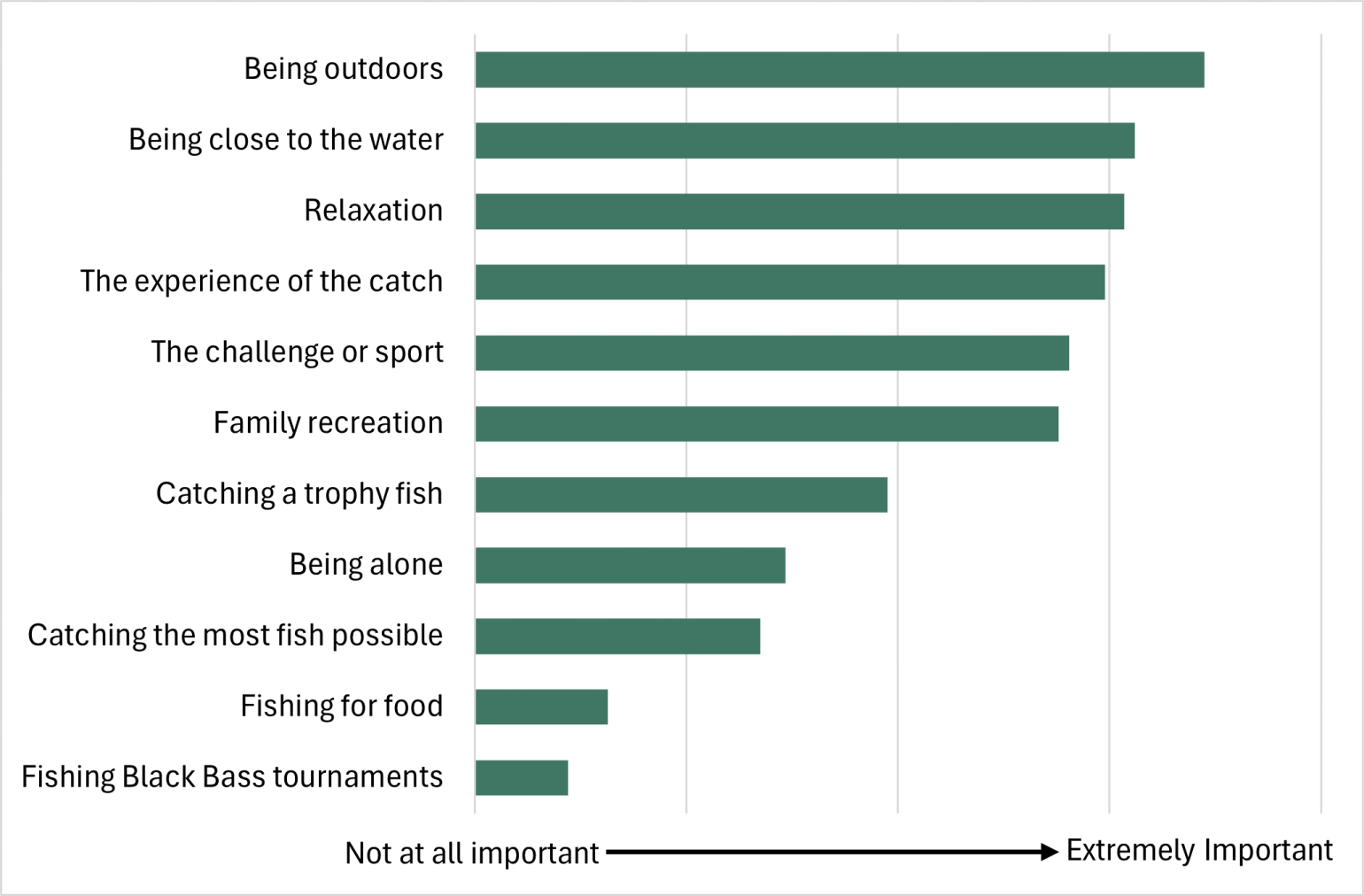
Other interesting results from the research revealed that 88% of the black bass survey participants said they primarily catch-and release, and only 18% (which is 128,870 anglers) had participated in a black bass tournament.
It’s estimated from the report that there are 711,592 black bass anglers in North Carolina. For mountain trout, the number is 369,968, according to the 2022 economic survey and research report also developed by the agency’s Social Science Research Unit.
Both reports uncovered valuable information for the agency’s Inland Fisheries Division to use in their management practices, and to ensure these state treasures remain robust and available to future generations.
You can review these and other fishing research reports here.
ID Chart to identify black bass species.
If you’re interested in learning about the agency’s fish stocking program, we’ve got you covered, here.
Happy fishing!