
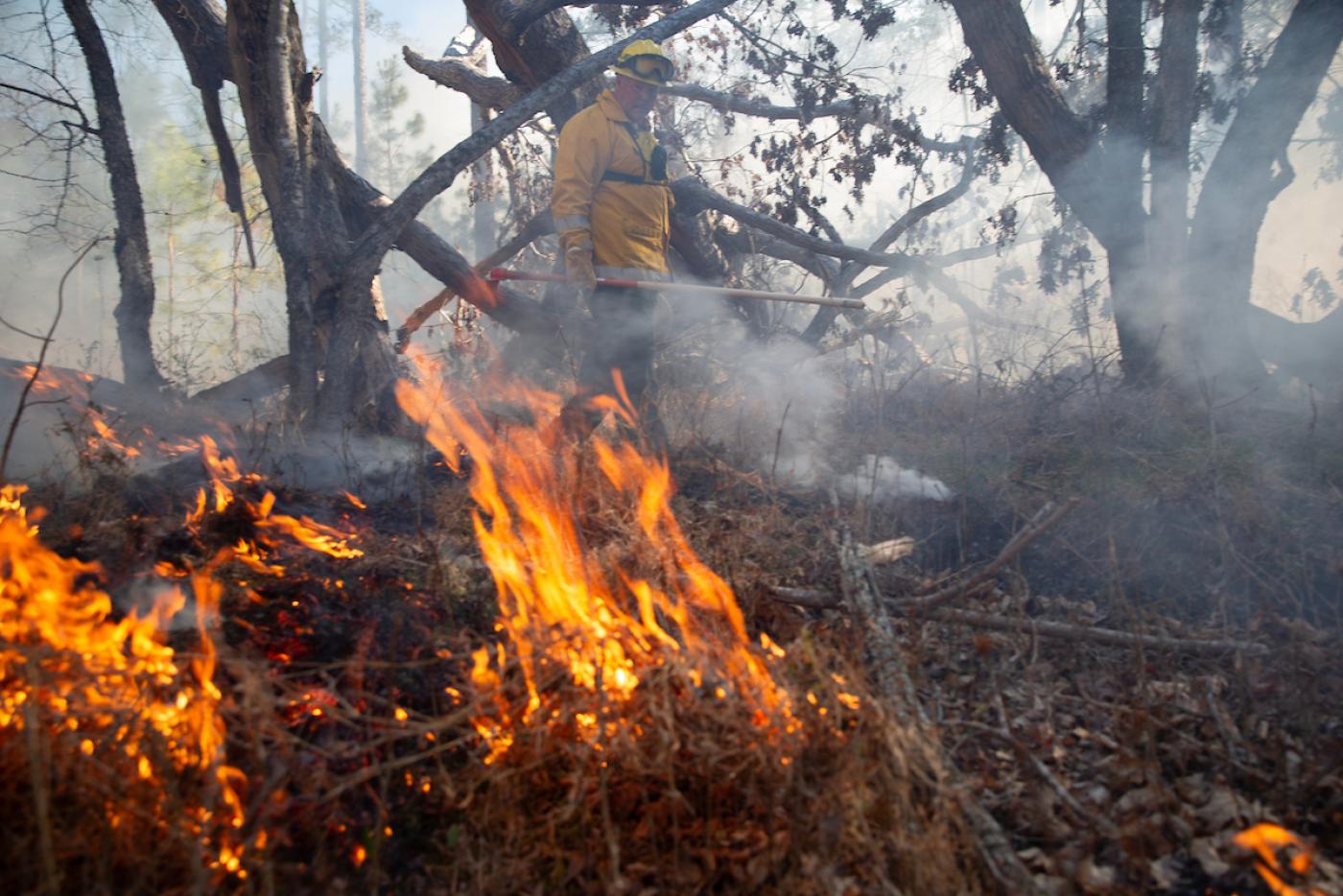
The N.C. Wildlife Resources Commission (NCWRC) is advising the public that if they see smoke on state game lands through summer, they can check whether it's a prescribed burn through its Prescribed Burns Dashboard mapping system.
“Most of the prescribed burning on game lands occurs between January and March because the cool, humid air with minimal wind provides conditions for low intensity fires,” said NCWRC Forestry Program Leader Casey Phillips. “However, we will still conduct burns well into spring and summer, because growing season fires provides for better control of young hardwoods in certain habitats.”
NCWRC conducts about 200 to 300 prescribed burns across 20,000 to 30,000 acres each year to restore and maintain wildlife habitat on most of the two-million acres of state game lands used by hunters, anglers and wildlife watchers throughout North Carolina. A prescribed burn is an intentional burning of vegetation and one of the most beneficial and cost-effective methods of managing habitat for wildlife.
Prescribed fires reduce the risk of hazardous forest fuels and improve biodiversity at a significantly larger scale than relying solely on chemical or mechanical methods. Mowing and spraying can be effective tools for wildlife habitat improvements but are much more expensive.
Many of North Carolina’s habitat-sensitive or rare species, like the red-cockaded woodpecker and Venus flytraps, are adapted to fire or found only in fire-dependent habitat. NCWRC staff typically conduct maintenance burns in multi-year cycles to open groundcover for quail, grassland birds, deer and turkeys. Burning encourages production of native grasses and herbaceous vegetation, which provides valuable food and cover for a wide variety of wildlife species. Prescribed burns are also used to help reduce high levels of forest fuels (such as leaf litter and pine straw) that can cause deadly wildfires.
NCWRC receives calls from people who are concerned about animals not being able to escape the fire, particularly during turkey hunting season in the spring.
“Fire is a natural occurrence that native wildlife has adapted to,” said Phillips “We also use burning techniques intended to give animals time and room to escape. After an area is burned, we typically see new vegetation within a few weeks, which means the animals won’t be far behind.”
For more information on prescribed burns, view No Cause for Alarm and visit Prescribed Fire: What NC Citizens Need to Know. For more information NCWRC game lands program, including an interactive game land map, visit www.ncwildlife.gov/gamelands.
For concerns about a potential fire or if unsure whether it’s a prescribed or controlled burn, call 911.
Subscribe to receive emails of the latest agency information, by topic.