
Eastern Chipmunk
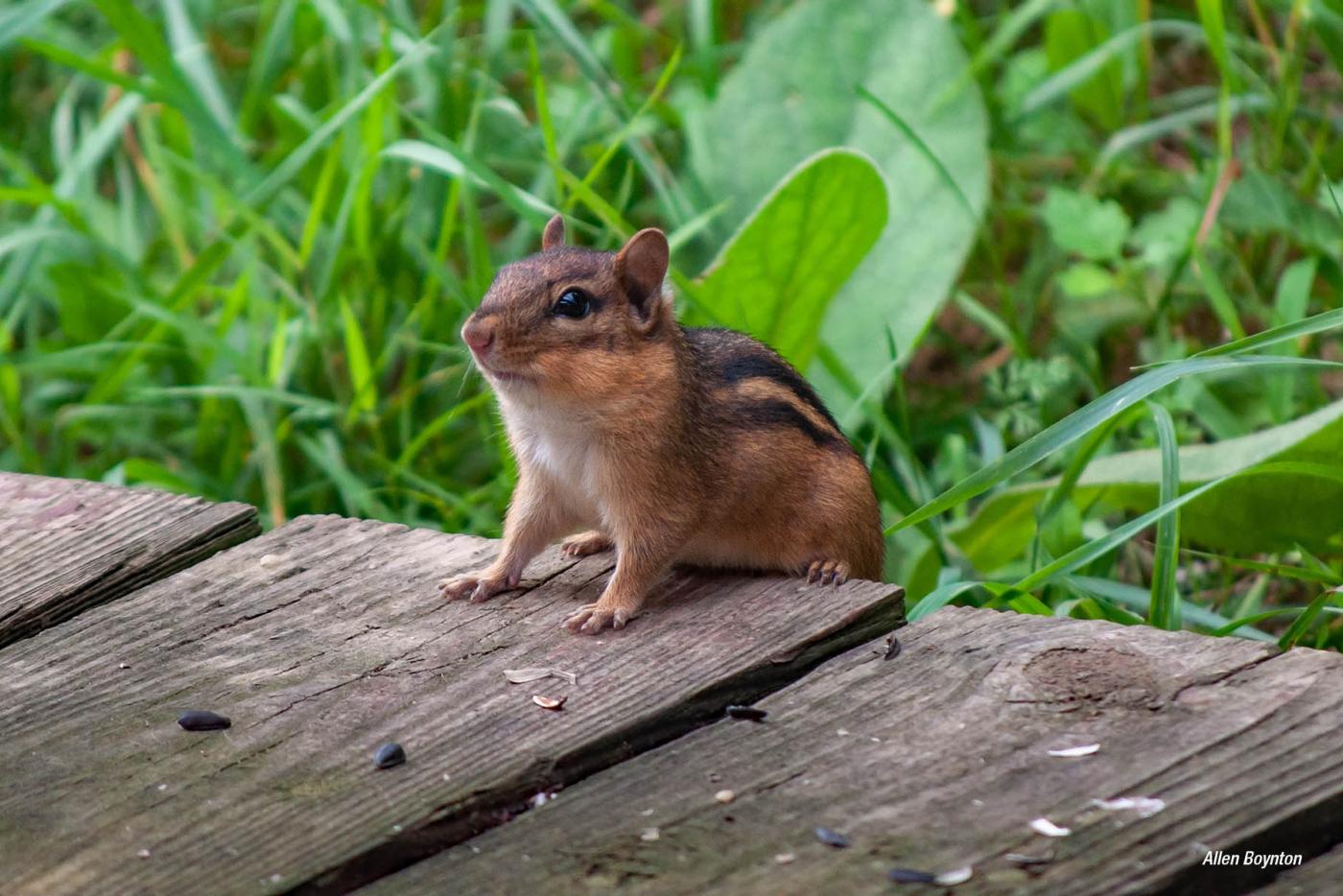
Scientific Name: Tamias striatus striatus
Classification: Nongame
Abundance: Common northwest of Raleigh
Photo Credits: Allen Boynton
Appearance
- The eastern chipmunk has reddish-brown fur, a black stripe down the center of its back, and a set of two black stripes, one on either side.
- Chipmunks measure 8 to 10 inches long, including 3 to 4 inches of tail.
- The chipmunk’s most distinguishing feature is its large cheek pouches, in which can be stored a heaping tablespoonful of nuts or seeds.
Diet
- Seeds, nuts, acorns, and berries. Other foods include insects, small amphibians, and birds.
Habitat and Habits
- Chipmunks are found in urban and rural habitats alike, preferring open woodlands or forest edges, with plenty of cover and dry hillsides for digging burrows.
- The chipmunk is most active in early morning and late afternoon, gathering and storing seeds, nuts, acorns, and berries
Eastern North Carolina Residents
A recent photograph from a Wilmington resident has biologists curious about chipmunks’ range, which has traditionally been north and west of Wake County. If you observe a chipmunk or its burrow in New Hanover, Brunswick, Onslow, Duplin, Sampson, Bladen, Cumberland, Moore, Montgomery, Anson, Richmond, or Robeson counties, take a picture (required), note the location, date, and time the chipmunk was seen, then contact the NC Wildlife Helpline at 866-318-2401.
Regulations
The Eastern chipmunk is a nongame species with no hunting or trapping season.