
Awards
The N.C. Wildlife Resources Commission bestows the prestigious Thomas L. Quay Wildlife Diversity Award and Lawrence G. Deidrick Small Game Award to recipients who have made outstanding contributions to wildlife and wildlife conservation in North Carolina.
Lawrence G. Diedrick Small Game Award
The N.C. Wildlife Resources Commission's Lawrence G. Diedrick Small Game Award recognizes efforts in habitat management, education, research, hunting heritage and other meaningful contributions that benefit small game. In some cases, small game populations benefit significantly from efforts focused on non-game or other species with similar habitat needs. The award is given annually to individuals and organizations whose actions significantly and positively impact any of North Carolina’s small game populations, including bobwhite quail, ruffed grouse, squirrel or rabbit.
The award is named for the late Larry Diedrick, a former Wildlife Commissioner (1993-2001) from Rocky Mount who was well-known for his passion and advocacy of wildlife conservation, in particular small game. After Commissioner Diedrick’s death in 2002, friends made contributions to the N.C. Wildlife Endowment Fund to support an annual small game award in his honor. The award was established in 2003.
Nominations
Nominations for the Lawrence G. Diedrick Small Game Award are open from March 1 to May 1 each year.
Nominations can be made in two categories: Individual and Organization.
- In the Individual category, past award recipients have been landowners who improved and integrated small game habitat into their forestry or farming operations as well as individuals who have promoted habitat management on public lands.
- In the Organization category, past award recipients have included corporations, government agencies and non-government organizations whose actions have improved small game habitat and promoted small game hunting heritage.
Nominations must include the following information:
- Name of nominee (person or organization), including address, phone and e-mail.
- Name of person making the nomination, including address, phone and e-mail.
- Detailed description of the methods the nominee has used to further conservation of small game species.
- Commitment and longevity of the nominee’s efforts.
- The long-lasting benefit to small game populations resulting from the nominee’s efforts.
Nominations may be submitted by:
- Email: Shauna.Glover@ncwildlife.gov
- Mail: N.C. Wildlife Resources Commission, Wildlife Management Division, c/o Diedrick Small Game Award, 1722 Mail Service Center, Raleigh, N.C. 27699-1722
Recipients are selected by the Wildlife Commission’s Small Game Committee and are recognized formally in the fall at a Wildlife Commission business meeting. A plaque listing all winners is prominently displayed in the Wildlife Commission headquarters, and winners also receive a memento related to their efforts.
2025 Recipient
Walter Cross
Mr. Cross worked for the N.C. Forest Service for 37 years. As the Randolph County Ranger, he coordinated the delivery of technical guidance for forestland across the county and provided landowners with knowledge necessary to manage their property for economic and ecological sustainability. In addition to his forest management duties, he also provided guidance to incorporate landowners’ wildlife objectives into their forest management activities.
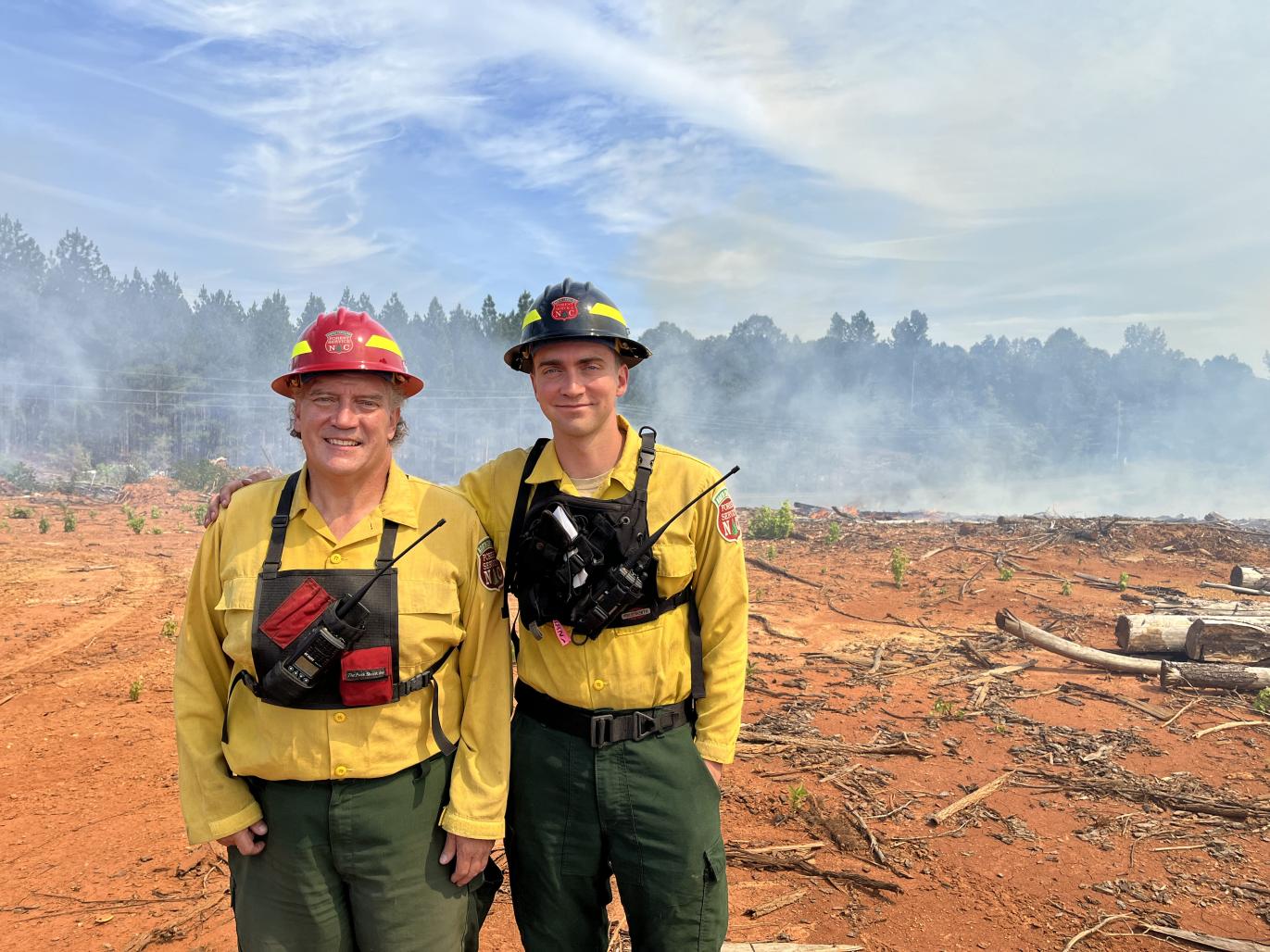
He was involved in several projects that helped convert crop fields to mixed hardwood forests along the Uwharrie River, which led to excellent protection of water quality and aquatic species while providing habitat for small game species like rabbits and woodcock.
He was a proponent and supporter of shortleaf pines and provided interested landowners with guidance to establish many acres of this declining species. The slower canopy closure of the shortleaf leads to longer periods of time for early successional wildlife habitat to persist in these young forests.
Mr. Cross sought opportunities to expand the use of prescribed burning in Randolph County. His work has been recognized by the N.C. Prescribed Fire Council and has educated members of the N.C. Land and Water Trust, Wake County Audubon and hundreds of private landowners about the importance of prescribed burning. He rarely took credit for his work, but rather, acknowledge partners and coworkers.
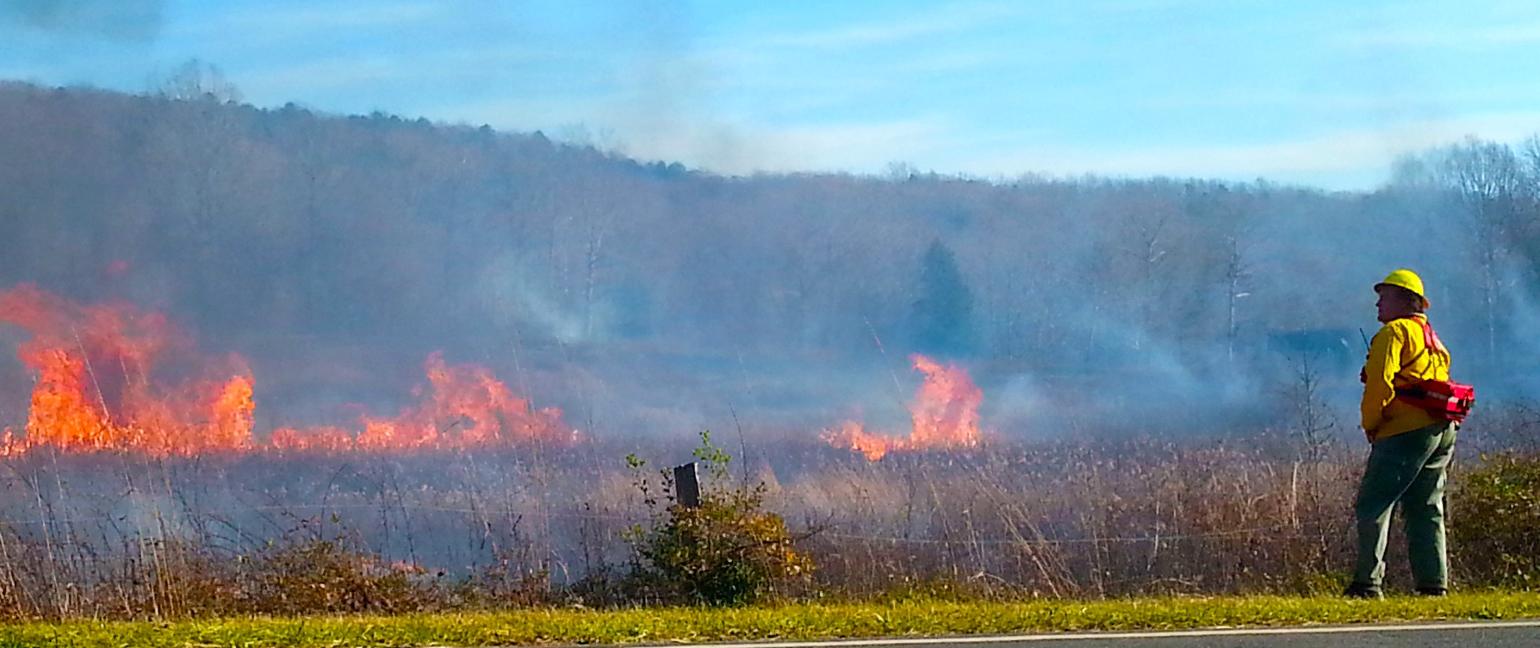
Mr. Cross chose a career to serve the landowners and natural resources of North Carolina. He built a skill set that he chose to utilize to improve and protect the natural resources he cared so deeply for, with a willingness to go beyond his job responsibilities and use his talents for the management of early successional habitats and other critical wildlife habitats. His ability to safely, efficiently and effectively carry out highly technical prescribed burns has improved habitat not only on the acres that were covered by his burn plans, but on many acres managed by those who saw his handywork and wanted the same thing on their property.
Mr. Cross passed away before receiving this award. His family accepted the award on his behalf during the October 2025 Commission meeting.
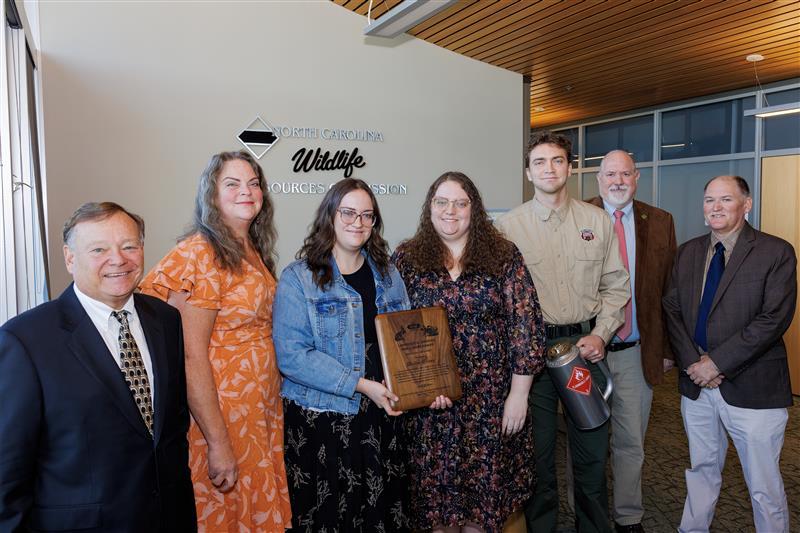
NCWRC Commission Chairman Mark Craig, Dr. Nancy Cross, Jamey Cross, Charley Cross, Ben Cross, NCWRC Executive Director Kyle Briggs, NCWRC Wildlife Management Chief Bradly Howard.
Thomas L. Quay Wildlife Diversity Award
The N.C. Wildlife Resources Commission's Thomas L. Quay Wildlife Diversity Award recognizes an individual or an organization who provides leadership in the conservation of wildlife diversity in North Carolina. The award honors an individual who has made significant, long-standing commitment to, and demonstrated leadership in promoting conservation of nongame species and their habitats in North Carolina. Nongame species are animals that have not open hunting, fishing or trapping season. The award is named for the late Thomas Quay, a retired professor of zoology at N.C. State University who passed away in 2012. A self-described “full-time volunteer and unpaid environmental activist,” Quay served on a variety of conservation boards while lobbying state agencies for various environmental causes. The award was established in 2006.
The 2026 nomination period is open through February. The recipient will be announced at a Commissioner meeting by Feb. 2027.
Anyone interested in nominating someone for the award must submit a nomination form and a detailed essay of the nominee’s contributions to wildlife conservation. The essay is limited to two pages (8 ½ x 11-inch paper, with 1-inch margins, single-spaced and 12-point Times New Roman font). Submissions that exceed the 2-page limit will be disqualified and returned to the nominator. We encourage you to also include the nominee's resume or CV.
Nominations may be submitted by:
- Electronic submission by Online Form and uploading supporting documents
- E-mail nomination form to Shauna Glover
- Mail nomination form to N.C. Wildlife Resources Commission, Wildlife Management Division, c/o Quay Wildlife Diversity Award, 1722 Mail Service Center, Raleigh, N.C. 27699-1722
In addition to this year’s nominations, nominations submitted in 2024 and 2025 will be considered. Nominations submitted before 2024 will be considered upon request. Email requests to Shauna Glover.
The Nongame Wildlife Advisory Committee recommends nominees for consideration to the Wildlife Commission's Habitat, Nongame and Endangered Species Committee who select a winner who is recognized formally at a Wildlife Commission business meeting.
2025 Recipient
Bill McLarney
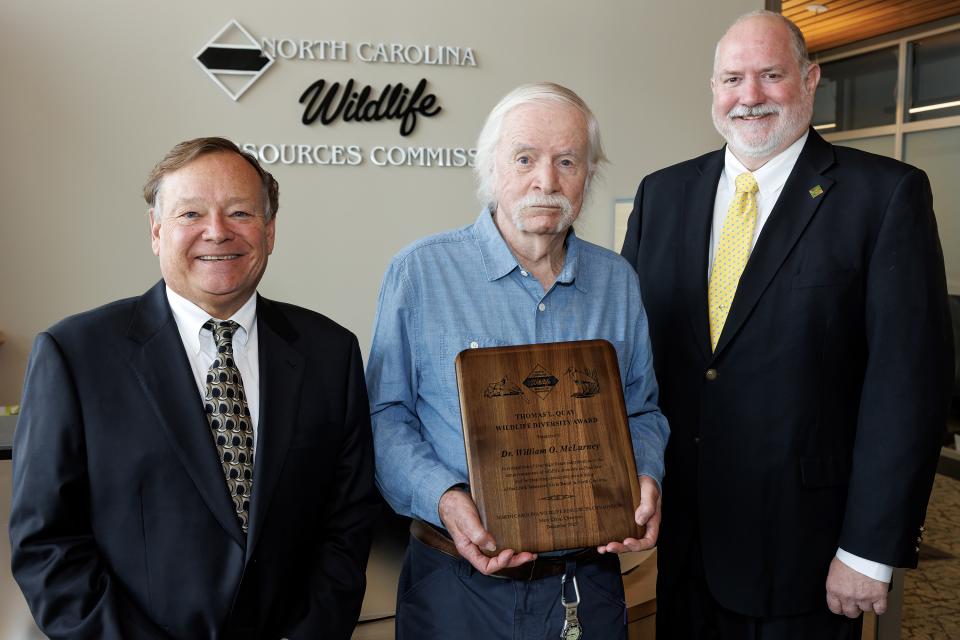
Franklin resident Dr. Bill McLarney has been named recipient of the 2025 Thomas L. Quay Wildlife Diversity Award. It’s one of the N.C. Wildlife Resources Commission’s (NCWRC) most prestigious recognitions given to individuals who make outstanding contributions to wildlife diversity in North Carolina and are considered leaders in wildlife resource conservation.
Dr. McLarney will join 19 respected leaders in the wildlife conservation field who have been similarly recognized. The first recipient was Quay himself, a retired professor of zoology at N.C. State University and self-described “full-time volunteer and unpaid environmental activist.”
Dr. McLarney majored in biology in college and received his M.S. and Ph. D. degrees in fisheries biology from the University of Michigan. During that time, he gained experience working on fish movements in Lake Erie, and completed his thesis work on sculpin feeding habits and migrations at a U.S. Bureau of Commercial Fisheries station in Little Port Walter, Alaska.
A childhood fascination with the extreme biodiversity of the tropics, and a desire to apply what he had learned directly in rural communities, led him ca. 1979, to live for several years in a remote village on the Caribbean coast of Costa Rica, investigating fish and finding ways to link that interest to the wellbeing of campesino, Afro-Caribbean and indigenous communities. This led to the founding of Asociacion ANAI, a Costa Rican non profit which has become one of the leading forces working for the integration of tropical forest conservation and indigenous rights in Costa Rica and Panama in and around the La Amistad International Park, and leading this year to the establishment of the San San/Pondsak National Park in Panama. In these and other “protected areas” and on tribal and private lands, the North Star of ANAI has been involved in biodiversity conservation with local communities. He still spends part of each year on site in Costa Rica and Panama.
In 1983, led by his wife Susan Ervin, a native of Morganton, Dr. McLarney established a home in Franklin, North Carolina and subsequently became a founder, first of the Little Tennessee Watershed Association, then of a regional land trust, today known as Mainspring Conservation Trust. Even before that, he played a lead role in protection of the upper Alarka Creek watershed, now managed by the U.S. Forest Service as the “Alarka Laurel” property. With the LTWA, and currently Mainspring, he initiated the Upper Little Tennessee River Watershed Stream Biomonitoring Program, which continues to this day, and which has accumulated what is probably the largest fish biomonitoring database in the world (with ANAI’s similar database in Costa Rica in second place). One of the earliest fruits of this endeavor was the use of biomonitoring data in collaboration with the Land Trust and multiple agencies to acquire the Duke Energy “Needmore Tract” and transfer it to the North Carolina Wildlife Resources Commission as what is now known as the “Needmore Game Lands”, what he considers to be one of the most important biodiversity conservation accomplishments in recent years in North Carolina.
But he considers his most important, but less visible work is stimulating communities, landowners and local people to be active in protecting and restoring streams and their watersheds. Inextricably interwoven with that is the opportunity to work with younger people, influencing future leaders and future conservation biologists through volunteer and intern programs. This is an experience Dr. McLarney still enjoys at age 85.
Maybe my most important future goal, and one I hope we all share, is to continue to combat apathy about things like biodiversity, climate change, right livelihood . . . A learned man, a well known professional philosopher, once asked me “Who cares about fish?” My response was “everybody should” because those fish are connected to everything else we collectively care about.